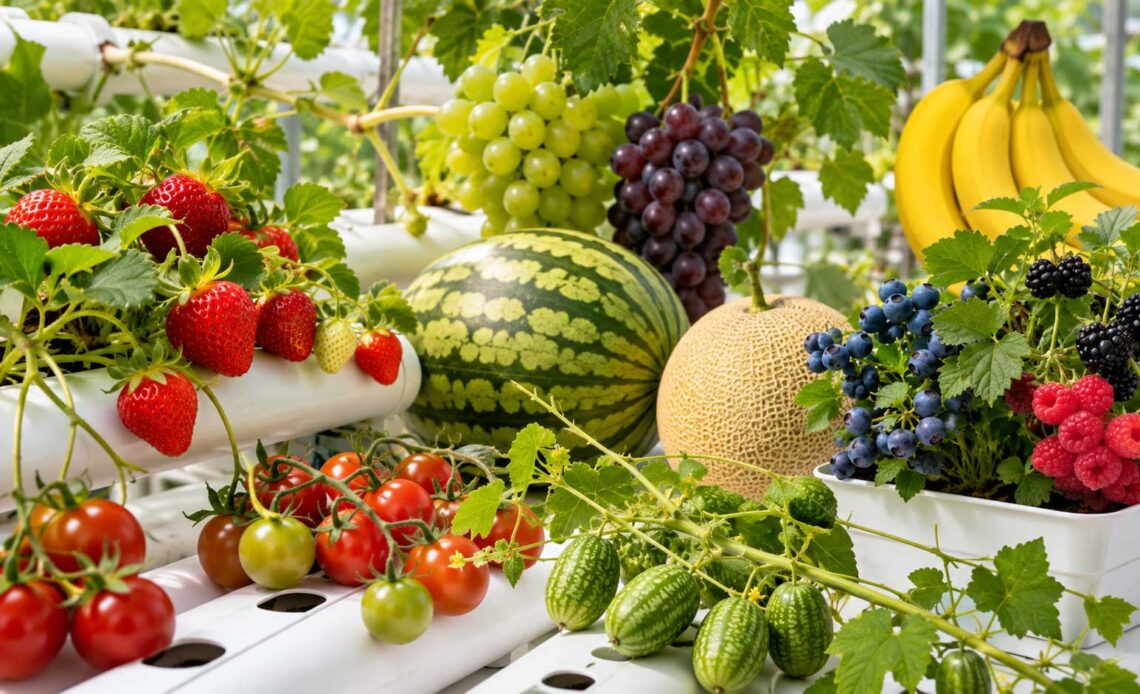
Growing fruit without soil might sound ambitious, but several popular fruiting plants do very well in hydroponic systems. Strawberries, tomatoes, peppers, cucumbers, and even some melons can be grown successfully when their roots receive the right balance of water, oxygen, and nutrients.
For home growers, the biggest advantage is control. You can manage the nutrient solution, pH, lighting, and growing environment instead of depending entirely on soil conditions or outdoor weather. Hydroponics can also make good use of limited space, whether you’re growing strawberries in a vertical system or training tomatoes and cucumbers upward in a greenhouse or indoor garden.
Some fruits are much easier to grow hydroponically than others, though. Strawberries are a great place to start, while crops such as melons, blueberries, and dwarf citrus need more space, patience, or careful nutrient management.
In this guide, we’ll compare 10 of the best hydroponic fruits to grow at home, along with the systems that suit them best, their basic growing requirements, approximate harvest times, and practical tips for getting a healthy crop.
Why Grow Fruits Hydroponically?
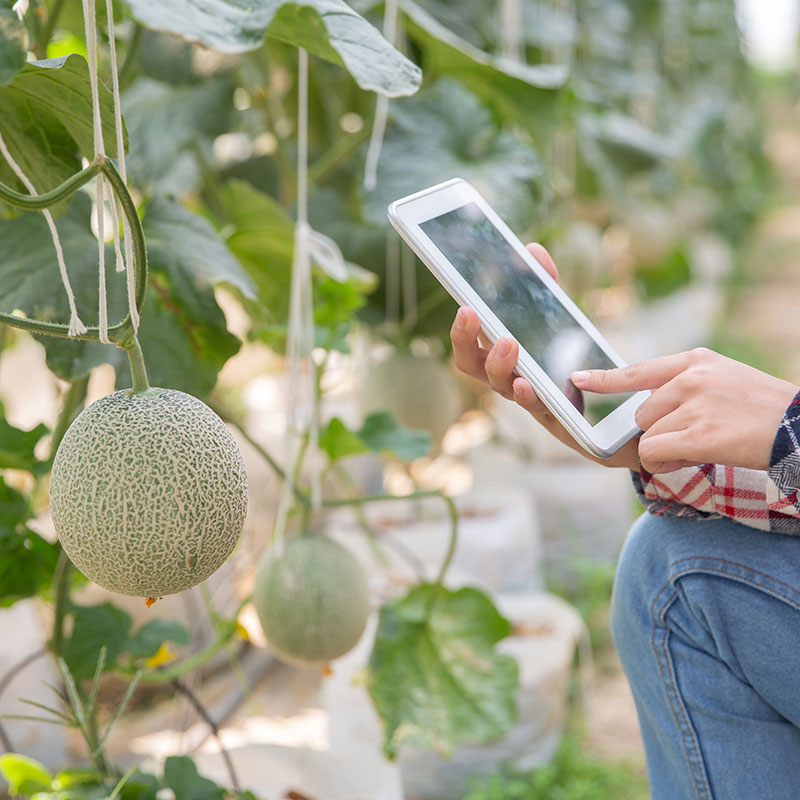
Growing fruit hydroponically gives you much more control over what happens around the roots. Instead of relying on garden soil, you manage the water, nutrients, pH, and root-zone conditions yourself. That extra control can be especially useful when growing fruit indoors, in a greenhouse, or anywhere outdoor growing space is limited.
Here are some of the main advantages.
Uses Less Water
Many hydroponic systems capture and reuse nutrient solution rather than allowing irrigation water to drain away after a single use. Recirculating systems can therefore use considerably less water than conventional growing methods.
The actual savings depend on the system, crop, climate, and how efficiently the garden is managed.
Grow Beyond the Outdoor Season
An indoor hydroponic setup isn’t tied to the traditional gardening season. With sufficient light and suitable temperatures, you can grow crops such as strawberries, tomatoes, and peppers when outdoor conditions aren’t suitable.
Year-round production does require adequate grow lighting and climate control, especially during winter.
Make Better Use of Limited Space
Hydroponics works particularly well when space is tight. Strawberries can be grown in towers or channels, while tomatoes, cucumbers, and other vining plants can be trained vertically.
This makes hydroponic fruit growing practical for small greenhouses, indoor grow rooms, patios, and other spaces where a traditional garden may not be possible.
Avoid Many Soil-Related Problems
Removing soil from the equation also removes some of the problems associated with it. You won’t have to deal with weeds, and plants aren’t exposed to soil in the same way as crops grown directly in the ground.
That doesn’t make hydroponic plants disease-free. Root diseases, algae, insects, and other problems can still develop, particularly when sanitation, airflow, or water temperature is neglected.
More Control Over Plant Nutrition
One of the biggest advantages of hydroponics is knowing what reaches the roots. You can monitor pH and nutrient concentration (EC) and make adjustments as the plants move from vegetative growth into flowering and fruit production.
Regular monitoring matters because nutrient imbalances can show up quickly in hydroponic systems.
Cleaner, Easier-to-Harvest Fruit
Hydroponically grown strawberries and other low-growing fruits don’t have to rest directly on garden soil. This can keep fruit cleaner and reduce the mud and soil splashing that often occurs after rain or watering.
Hydroponics isn’t automatically better than growing in soil, but it gives home growers a level of control that’s difficult to achieve in a traditional garden. The key is choosing crops suited to the system—and some fruits are much easier to grow this way than others.
10 Best Hydroponic Fruits to Grow at Home
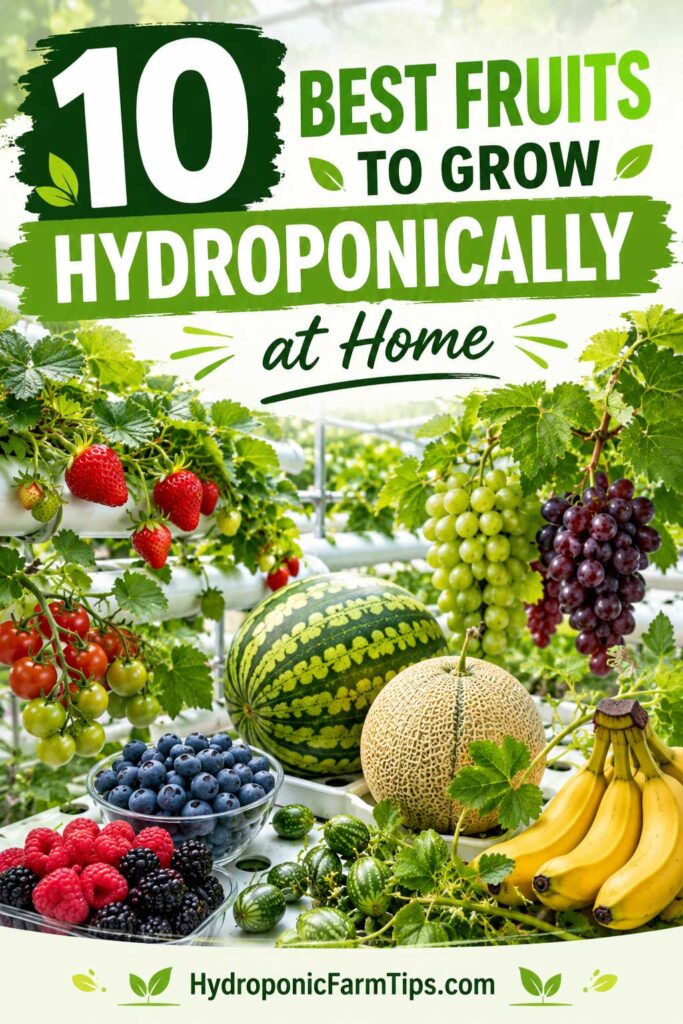
Some fruiting plants are much better suited to hydroponics than others. Strawberries can fit into relatively compact systems, while tomatoes, peppers, cucumbers, and melons need more root space and support as they mature. Long-lived crops such as blueberries and dwarf citrus require even more patience and careful management.
Here’s a quick comparison of the best hydroponic fruits in this guide before we look at each one in detail.
| Fruit | Rating | Difficulty | Recommended Hydroponic System | Approx. Time to First Harvest |
|---|---|---|---|---|
| 🍓 Strawberries | ⭐ | Easy | NFT, drip, vertical systems | 8–12+ weeks |
| 🍅 Tomatoes | ⭐⭐ | Moderate | Dutch bucket, drip | 10–16+ weeks |
| 🌶️ Peppers | ⭐⭐ | Moderate | Dutch bucket, drip, DWC | 10–14+ weeks |
| 🥒 Cucumbers | ⭐⭐ | Moderate | Dutch bucket, drip | 50–70+ days |
| 🍆 Eggplants | ⭐⭐ | Moderate | Dutch bucket, drip | 70–90+ days |
| 🍈 Melons | ⭐⭐⭐ | Advanced | Dutch bucket, drip | 80–120+ days |
| 🍉 Mini Watermelons | ⭐⭐⭐ | Advanced | Dutch bucket, drip | 70–100+ days |
| 🫐 Blueberries | ⭐⭐⭐ | Advanced | Drip with soilless substrate | 1–2+ years |
| 🍋 Dwarf Citrus | ⭐⭐⭐ | Advanced | Drip with soilless substrate | 1–3+ years |
| 🍍 Pineapple | ⭐⭐⭐ | Advanced | Media-based drip system | 18–24 months or considerably longer |
Harvest times are approximate. Variety, starting plant size, temperature, light, pollination, and overall growing conditions can all affect how quickly plants begin producing.
Good to know: Tomatoes, peppers, cucumbers, eggplants, melons, and watermelons are botanically fruits even though several of them are usually treated as vegetables in the kitchen. They’re included here because they produce fruit from the flower of the plant and can be grown successfully in suitable hydroponic systems.
For beginners, strawberries are the easiest place to start. Tomatoes, peppers, and cucumbers are also practical choices once you’re comfortable monitoring pH and nutrients. Blueberries, dwarf citrus, melons, and pineapples are better suited to growers who have more space and don’t mind waiting longer for a harvest.
Now let’s look at each of these hydroponic fruits individually, including the system, space, and care each one needs.
1. Strawberries

If you’re new to hydroponics, strawberries are one of the best hydroponic fruits to start with. Their relatively compact root systems don’t require the large containers needed for tomatoes or melons, and the plants work well in indoor gardens, greenhouses, and vertical setups. For a first hydroponic strawberry crop, starting with healthy transplants or rooted runners is usually more practical than growing plants from seed.
NFT and drip systems are both good choices, while vertical systems are particularly useful when floor space is limited. Day-neutral and everbearing varieties are worth considering because they can flower and produce fruit over an extended period when growing conditions are suitable.
Strawberries do need a little hands-on care. Keep the crown—the point where the leaves meet the roots—above the growing medium rather than burying it. Runners can also be removed if your goal is fruit production rather than propagating additional plants. Indoors, where insect pollinators aren’t available, gentle airflow or using a small soft brush can help move pollen among the flowers.
Ideal Growing Conditions
| Requirement | Recommended Range |
|---|---|
| pH | 5.8–6.2 |
| EC | 1.2–1.8 mS/cm |
| Water Temperature | 65–72°F (18–22°C) |
| Air Temperature | 65–75°F (18–24°C) |
| Light | 12–16 hours daily |
| Humidity | 50–70% |
Under good conditions, plants started from established transplants may begin producing berries within a few months, although timing varies considerably by variety and starting plant size. If you’re concerned about food safety or growing methods, see our guide to hydroponic strawberries and food safety.
Difficulty: ⭐ Easy
Recommended systems: NFT, drip, or vertical hydroponic systems
Best for: Beginners and growers with limited space
Growing tip: Let strawberries develop their full red color before harvesting. Strawberries don’t continue to ripen significantly after they’re picked, so harvesting too early usually means less flavor.
2. Tomatoes
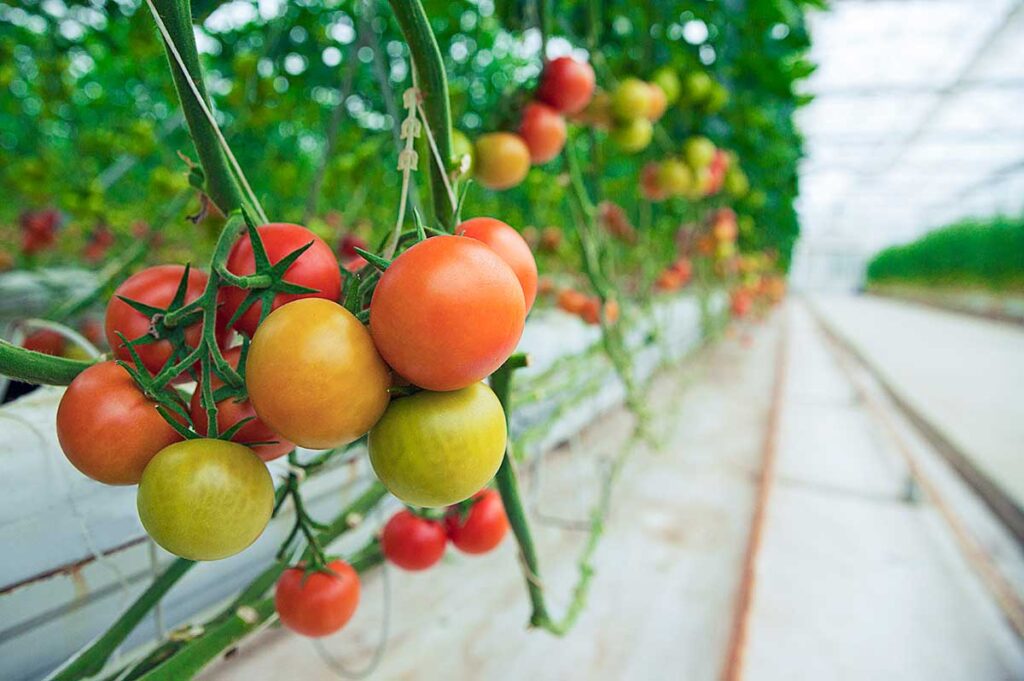
Tomatoes are a natural fit for hydroponics, especially if you have enough vertical space to support the plants as they grow. They respond well to controlled feeding and can keep producing over a long period, which is one reason they’re so common in both home hydroponic gardens and commercial greenhouses.
For a home setup, Dutch bucket and drip systems are particularly practical because they provide plenty of root space and make it easier to support mature plants. Smaller tomato varieties can also be grown in DWC systems, although large indeterminate plants quickly become heavy and need sturdy trellising.
If space is limited, cherry tomatoes are usually easier to manage than large slicing varieties. Indeterminate tomatoes continue growing and producing as long as conditions remain favorable, while determinate varieties stay more compact and produce most of their crop within a shorter period.
Ideal Growing Conditions
| Requirement | Recommended Range |
|---|---|
| pH | 5.8–6.3 |
| EC | 2.0–3.5 mS/cm |
| Water Temperature | 65–72°F (18–22°C) |
| Air Temperature | 70–80°F (21–27°C) |
| Light | 14–16 hours daily indoors |
| Humidity | 55–70% |
Plan for support early rather than waiting until the vines are loaded with tomatoes. Stakes, cages, or overhead trellises can all work depending on your setup. Indeterminate plants may also benefit from regular pruning to control their size and improve airflow through dense foliage.
Pollination is another consideration when growing indoors. Tomato flowers are self-fertile, but they still benefit from movement. A gentle shake of the flowering truss, airflow from a fan, or a small electric pollinator can help release pollen when insects and natural wind aren’t available.
The first ripe tomatoes may appear roughly 10–16 weeks after transplanting, depending on the variety and growing conditions. Cherry tomatoes generally mature sooner than large-fruited types, and healthy indeterminate plants can continue producing for months.
Difficulty: ⭐⭐ Moderate
Recommended systems: Dutch bucket or drip; DWC for smaller varieties
Best for: Growers who have enough vertical space for supporting and training plants
Growing tip: Start with a productive cherry tomato rather than a large beefsteak variety. Compact fruits place less weight on the plant, usually mature sooner, and are easier to manage in a home hydroponic setup.
3. Peppers
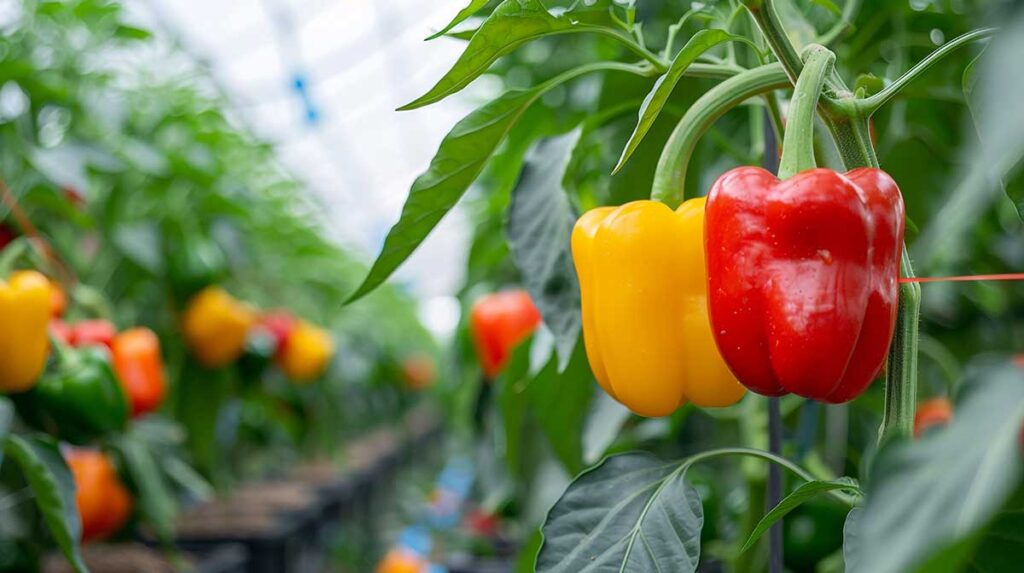
Peppers are well suited to home hydroponics because the plants stay relatively manageable while producing fruit over an extended period. Sweet bell peppers, jalapeños, serranos, and many other varieties can all be grown this way, so you can choose a type based on the space you have and what you actually like to eat.
Dutch bucket and drip systems give mature pepper plants plenty of root space, while DWC can also work well when the container is large enough and the nutrient solution remains well oxygenated. Compared with sprawling crops such as melons, peppers are relatively easy to fit into an indoor garden or small greenhouse.
Ideal Growing Conditions
| Requirement | Recommended Range |
|---|---|
| pH | 5.8–6.5 |
| EC | 2.0–3.0 mS/cm |
| Water Temperature | 65–72°F (18–22°C) |
| Air Temperature | 70–85°F (21–29°C) |
| Light | 14–16 hours daily indoors |
| Humidity | 50–70% |
As pepper plants begin setting fruit, their branches can become surprisingly heavy. A small stake or cage added early will provide support without disturbing the roots later. Nutrient management also becomes important once flowering begins. Too much nitrogen can encourage plenty of leafy growth without a corresponding increase in flowers and fruit, so avoid simply increasing fertilizer strength in an attempt to boost production.
Peppers are self-pollinating, but indoor plants can benefit from gentle movement. Airflow from a fan or occasionally shaking the flowering branches can help move pollen when natural wind and insects aren’t present.
Depending on the variety and growing conditions, you may begin harvesting peppers roughly 10–14 weeks after transplanting. Many peppers can be picked while green or left on the plant longer to develop their mature color and flavor. Regular harvesting also prevents mature fruit from remaining on the plant unnecessarily.
Difficulty: ⭐⭐ Moderate
Recommended systems: Dutch bucket, drip, or DWC
Best for: Indoor gardens and growers looking for a productive fruiting plant that doesn’t require as much space as tomatoes or melons
Growing tip: Don’t judge ripeness by size alone. Many peppers change color as they mature, and allowing some fruit to reach its final color can noticeably change its sweetness, flavor, and heat.
4. Blueberries

Blueberries can be grown without traditional soil, but they’re a much bigger commitment than strawberries, tomatoes, or peppers. The biggest challenge is their preference for acidic root-zone conditions, along with the fact that blueberry bushes are perennial plants that need time to become established before producing substantial crops.
They’re also better suited to soilless substrate culture than to systems where the roots remain directly in nutrient solution. A drip-fed container filled with an appropriate acidic substrate, such as a pine-bark-based mix, gives the roots physical support while allowing you to control irrigation and nutrition. This makes containerized drip systems a more practical choice than NFT or DWC for most home growers.
Ideal Growing Conditions
| Requirement | Recommended Range |
|---|---|
| pH | 4.5–5.5 |
| EC | 1.2–1.8 mS/cm |
| Root-Zone Temperature | 60–70°F (16–21°C) |
| Air Temperature | 65–80°F (18–27°C) |
| Light | 12–16 hours daily indoors |
| Humidity | 50–70% |
The lower pH is particularly important. Blueberries are acid-loving plants, and allowing the root zone to become too alkaline can interfere with nutrient availability and eventually show up as yellowing leaves or poor growth.
Variety selection matters as well. Different blueberry cultivars have different chilling requirements, mature sizes, and climate preferences, so choose one suited to the environment where you’ll actually be growing it. Some cultivars are self-fertile, but growing compatible varieties together can improve pollination and fruit set in certain situations.
Blueberries also require patience. A young plant may take a year or more to produce a worthwhile crop, with yields generally increasing as the bush matures. That makes blueberries less appealing if your priority is a quick harvest, but potentially worthwhile if you’re building a long-term hydroponic or soilless fruit garden.
Difficulty: ⭐⭐⭐ Advanced
Recommended system: Drip irrigation with an acidic soilless substrate
Best for: Experienced growers interested in maintaining a perennial fruit crop
Growing tip: Don’t manage blueberries using the same nutrient solution and pH target as tomatoes or peppers. Their preference for a considerably more acidic root zone is one of the main reasons they’re better treated as a separate crop.
5. Melons (Cantaloupe & Honeydew)
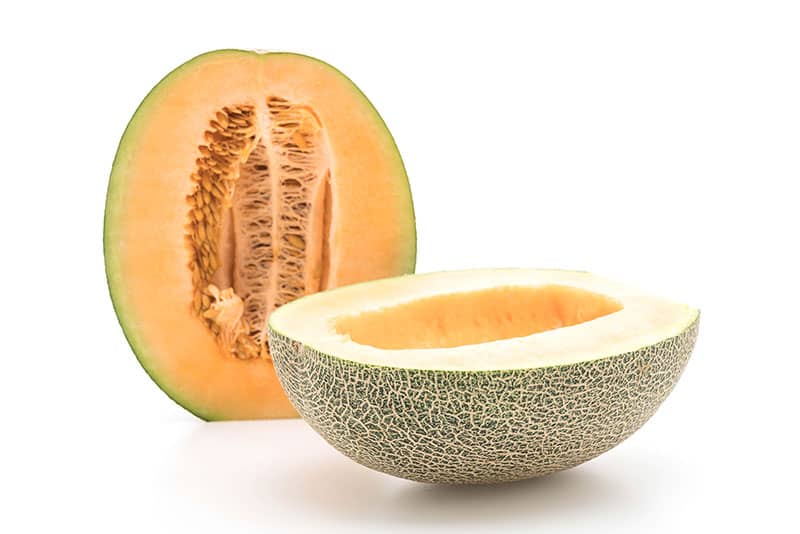
Melons can be grown hydroponically, but they’re better suited to growers who have already handled smaller fruiting crops. Cantaloupe and honeydew develop long vines, large root systems, and increasingly heavy fruit, so they need considerably more room than strawberries or peppers.
For most home growers, Dutch buckets or drip-fed containers are the most practical options. They provide enough root space for mature plants and work well with a trellis above the growing area. Large media beds can also be used if there’s enough room for the vines and their support structure.
Ideal Growing Conditions
| Requirement | Recommended Range |
|---|---|
| pH | 5.8–6.5 |
| EC | 2.2–3.5 mS/cm |
| Water Temperature | 65–72°F (18–22°C) |
| Air Temperature | 75–90°F (24–32°C) |
| Light | 14–16 hours daily indoors |
| Humidity | 50–60% |
The vines can be trained vertically to make better use of space, but the fruit itself needs support once it begins gaining weight. Mesh slings or fabric hammocks attached to the trellis can carry the melon without putting excessive strain on the stem.
Pollination also deserves attention. Melon plants produce separate male and female flowers, and indoor plants may not have insects available to transfer pollen between them. You can hand-pollinate by transferring pollen from a male flower to the center of an open female flower, which can be identified by the tiny developing fruit behind its petals.
Depending on the cultivar and growing environment, melons generally need around 80–120 days from planting to harvest. Ripeness indicators vary by type. Cantaloupes often develop a stronger aroma and may begin separating from the stem when mature, while honeydew melons don’t necessarily “slip” from the vine in the same way.
Difficulty: ⭐⭐⭐ Advanced
Recommended systems: Dutch bucket or drip-fed media system
Best for: Growers with plenty of vertical space and a sturdy trellis
Growing tip: Build your trellis and fruit-support system before the vines get large. Trying to add supports after several melons are already developing makes it much easier to damage vines, roots, or fruit.
6. Mini Watermelons
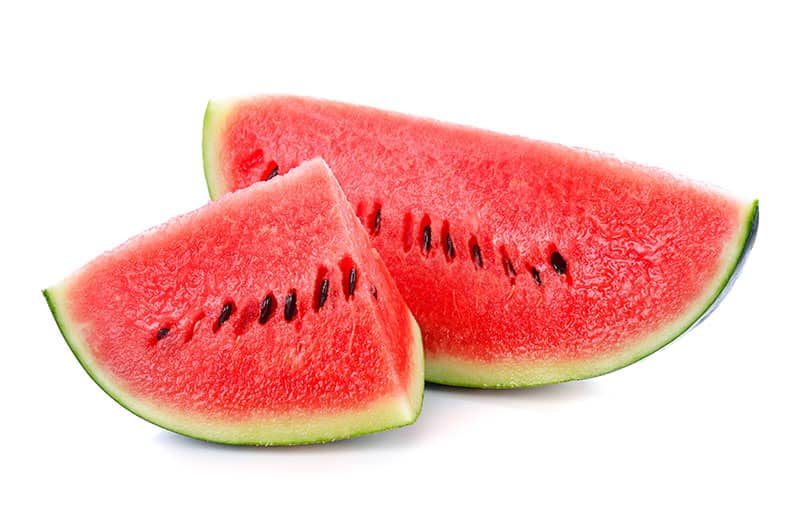
Watermelons aren’t the easiest hydroponic crop, but smaller-fruited varieties make the project much more manageable. The vines still need plenty of room to grow, yet the lighter fruit is easier to support than a full-size watermelon when plants are trained vertically.
For a home setup, Dutch buckets and drip-fed containers are among the most practical choices. They provide enough root space for vigorous vines while making it possible to build a trellis around the plants. Compact cultivars such as ‘Sugar Baby’ are worth considering when space is limited, although “mini” refers mainly to the size of the fruit—the vines can still spread considerably.
Ideal Growing Conditions
| Requirement | Recommended Range |
|---|---|
| pH | 5.8–6.5 |
| EC | 2.2–3.5 mS/cm |
| Water Temperature | 65–72°F (18–22°C) |
| Air Temperature | 75–90°F (24–32°C) |
| Light | 14–16 hours daily indoors |
| Humidity | 50–60% |
If you grow the vines vertically, don’t expect the stems to carry the weight of developing watermelons on their own. Each fruit should be supported with a strong mesh or fabric sling secured to the trellis. Make sure the sling allows room for the watermelon to expand as it matures.
Watermelons also produce separate male and female flowers. Outdoors, bees normally handle pollination, but indoor growers may need to transfer pollen manually from a male flower to a female flower. The female flowers are easy to recognize once you know what to look for: they have a tiny immature watermelon directly behind the flower.
Most compact varieties need roughly 70–100 days from planting to harvest, although cultivar and growing conditions make a difference. Determining ripeness can take some practice. A drying tendril close to the fruit and a change in the color of the area where the watermelon rests are useful clues, but it’s best to learn the specific harvest indicators for the variety you’re growing.
Difficulty: ⭐⭐⭐ Advanced
Recommended systems: Dutch bucket or drip-fed media system
Best for: Experienced growers with warm conditions and enough room for vigorous vines
Growing tip: Don’t let the word “mini” fool you into planning a tiny growing area. The fruit may be compact, but watermelon vines still need substantial room, strong light, and a sturdy support system.
7. Cucumbers
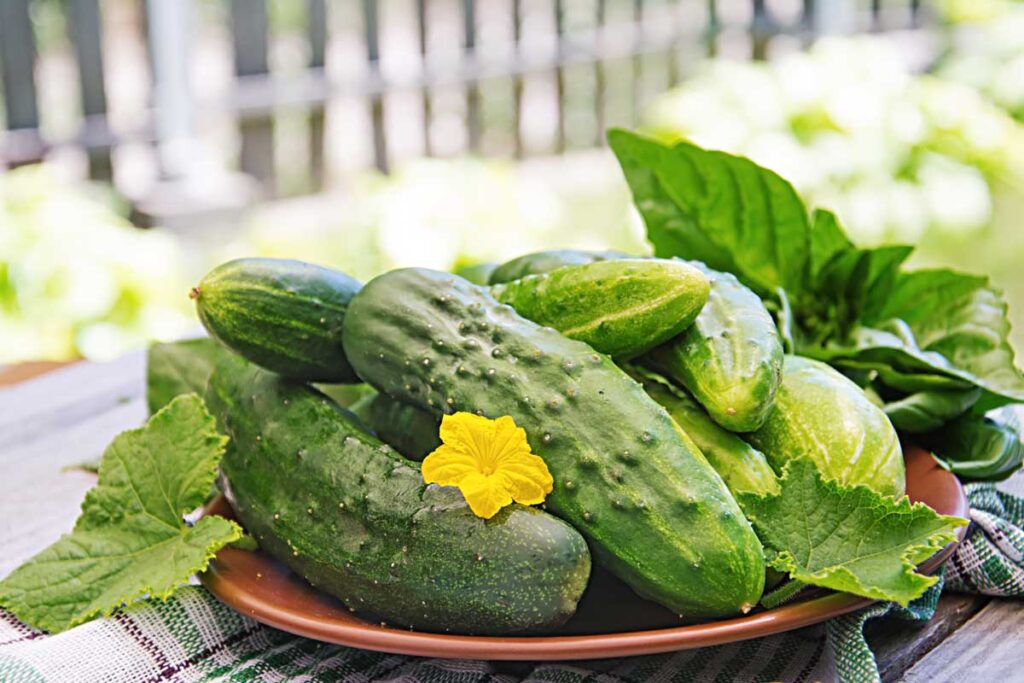
Cucumbers are botanically fruits, even though we usually treat them as vegetables in the kitchen. That’s why you’ll also find them in our guide to the best hydroponic vegetables. They’re one of the more approachable fruiting crops for hydroponics because they grow quickly and can begin producing relatively early compared with tomatoes, peppers, or melons.
The plants aren’t small, though. Cucumber vines grow aggressively once established and need somewhere to climb. For home growers, Dutch buckets or drip-fed containers provide plenty of root space and pair naturally with a vertical trellis. Other hydroponic systems can work, but make sure there’s enough room for both the roots and the rapidly expanding vines.
Ideal Growing Conditions
| Requirement | Recommended Range |
|---|---|
| pH | 5.5–6.2 |
| EC | 1.8–2.5 mS/cm |
| Water Temperature | 65–72°F (18–22°C) |
| Air Temperature | 70–85°F (21–29°C) |
| Light | 14–16 hours daily indoors |
| Humidity | 60–70% |
Variety selection can make indoor growing considerably easier. Parthenocarpic cucumbers can develop fruit without pollination, which removes one of the complications of growing flowering crops indoors. Some are also bred specifically for greenhouse production and vertical training.
Give the vines support early and guide new growth onto the trellis as it develops. Removing old or damaged leaves can improve airflow around dense plants, but there’s no need to constantly strip healthy foliage. Cucumbers also use a considerable amount of water once they’re large and actively producing, so keep an eye on reservoir levels rather than assuming your normal refill schedule will be enough.
Depending on the cultivar, the first cucumbers may be ready approximately 50–70 days after planting. Once production gets underway, check the vines frequently. Cucumbers can go from a good harvesting size to oversized surprisingly quickly.
Difficulty: ⭐⭐ Moderate
Recommended systems: Dutch bucket or drip-fed container
Best for: Growers who want relatively quick harvests and have enough vertical space for a trellis
Growing tip: Pick cucumbers according to the mature size recommended for your variety rather than waiting for them to become as large as possible. Regular picking also keeps oversized fruit from hiding among the leaves.
8. Eggplants
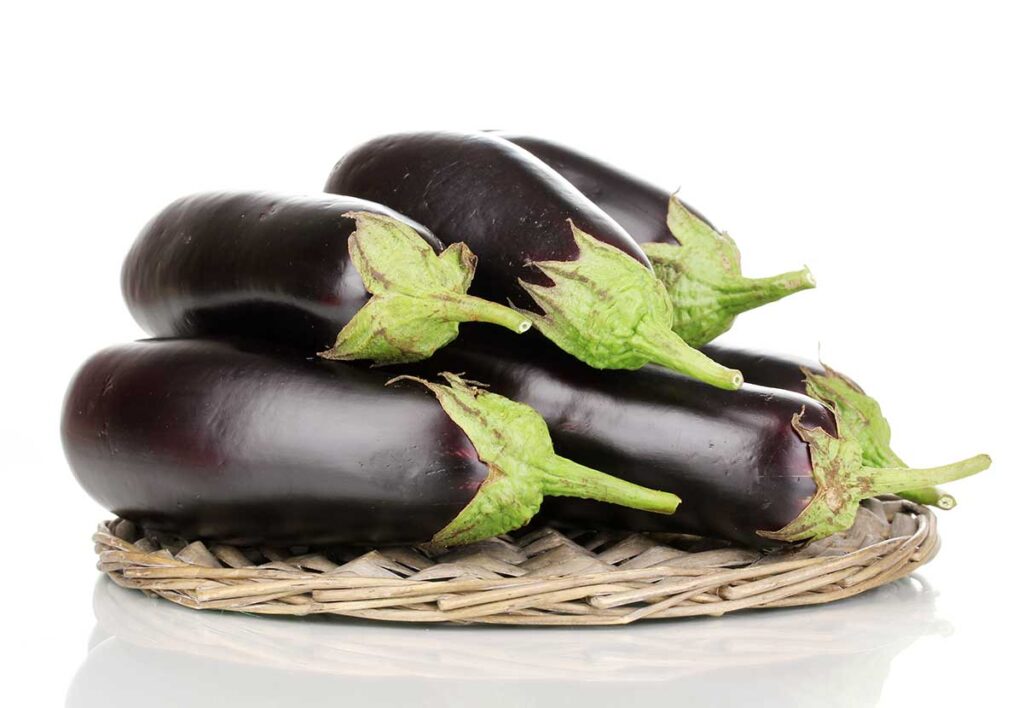
Eggplants are botanically fruits and belong to the same plant family as tomatoes and peppers. They can adapt well to hydroponic growing, particularly when given plenty of light, warm temperatures, and enough root space to support a mature plant.
For most home setups, Dutch buckets and drip-fed containers are practical choices. Compact varieties can also work in larger DWC systems, but keep in mind that even a relatively small eggplant can become top-heavy once several fruits begin developing.
Ideal Growing Conditions
| Requirement | Recommended Range |
|---|---|
| pH | 5.8–6.5 |
| EC | 2.0–3.5 mS/cm |
| Water Temperature | 65–72°F (18–22°C) |
| Air Temperature | 70–85°F (21–29°C) |
| Light | 14–16 hours daily indoors |
| Humidity | 50–70% |
Support is easiest to add while the plant is still young. A stake, cage, or simple trellis can prevent branches from bending once the developing eggplants begin adding weight. If you’re growing indoors or have limited space, choosing a compact cultivar will make the plant considerably easier to manage.
Eggplant flowers are self-fertile, but some movement can improve pollen release when plants are grown indoors. Gentle airflow from a fan or lightly tapping the flowering branches is usually enough; you don’t necessarily need to hand-pollinate every individual flower.
Most varieties can begin producing roughly 70–90 days after transplanting, although smaller-fruited cultivars may mature sooner. Harvest timing matters with eggplants because bigger isn’t always better. Fruit is generally best picked while the skin is still glossy, the flesh feels firm, and the fruit has reached an appropriate size for its variety.
Difficulty: ⭐⭐ Moderate
Recommended systems: Dutch bucket or drip; larger DWC systems can work for compact varieties
Best for: Growers comfortable managing larger fruiting plants
Growing tip: Watch the skin rather than waiting for the eggplant to become enormous. A glossy surface is a useful sign that the fruit is still at a good harvesting stage; dull skin often indicates that it has been left on the plant too long.
9. Dwarf Citrus (Lemons, Limes & Calamondins)
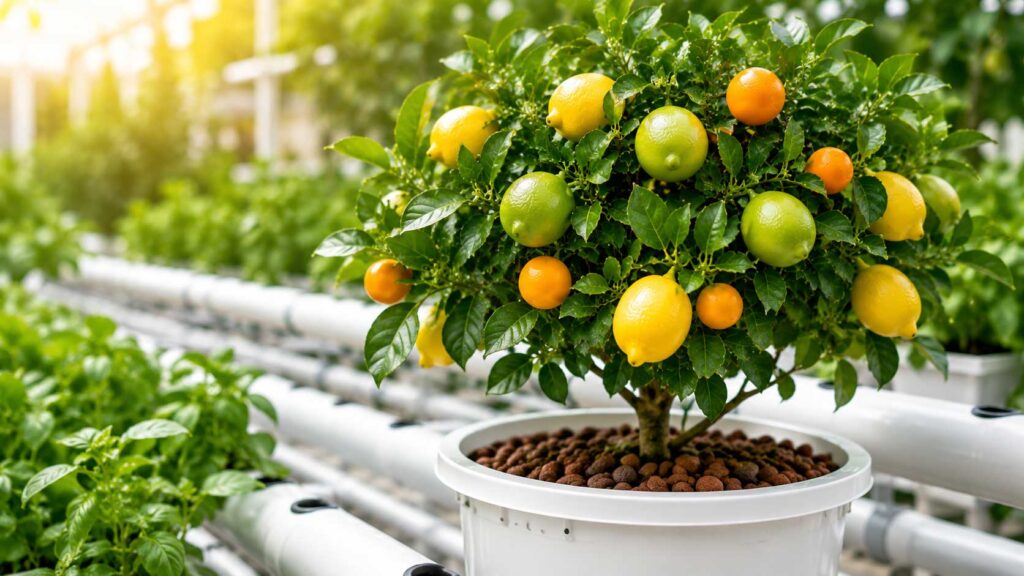
Dwarf citrus is quite different from growing strawberries or tomatoes hydroponically. These are woody, perennial trees with substantial root systems, so they’re best grown in a soilless substrate that receives a controlled nutrient solution rather than with their roots suspended directly in water.
A large container with drip irrigation is usually the most practical approach. The growing medium provides physical support for the tree while still allowing you to manage irrigation and nutrition much like other hydroponic crops. Dwarf and naturally compact citrus varieties are especially useful indoors because a full-size citrus tree can quickly become impractical.
Ideal Growing Conditions
| Requirement | Recommended Range |
|---|---|
| pH | 5.5–6.5 |
| EC | 1.8–2.5 mS/cm |
| Root-Zone Temperature | 65–72°F (18–22°C) |
| Air Temperature | 65–85°F (18–29°C) |
| Light | Strong light; supplemental grow lighting may be needed indoors |
| Humidity | 50–70% |
Meyer lemon, Key lime, and calamondin are among the compact citrus types worth considering for container growing. Even dwarf trees need considerably more room than annual crops, however, so plan for both the mature canopy and a container large enough to support the root system.
Light is often the bigger challenge indoors. A bright window may keep a citrus tree alive but may not provide enough light for reliable flowering and fruit development throughout the year. Supplemental grow lighting can be useful when natural light is limited.
Pollination requirements vary, but many commonly grown citrus varieties are self-fertile. Indoors, gently moving the flowers or using a small soft brush can help when there are no insects or outdoor airflow.
Don’t expect the quick turnaround you’d get from cucumbers or strawberries. A young citrus tree may take several years to produce fruit, while an older grafted nursery tree may fruit considerably sooner. Starting with a healthy grafted dwarf tree is therefore much more practical than growing citrus from seed if fruit production is your goal.
Difficulty: ⭐⭐⭐ Advanced
Recommended system: Large container with soilless substrate and drip fertigation
Best for: Experienced growers looking for a long-term indoor, greenhouse, or sunroom crop
Growing tip: If your main goal is harvesting fruit, start with a grafted dwarf citrus tree rather than a seed-grown plant. You’ll begin with more mature plant material and won’t have to wait through the long juvenile period typical of citrus grown from seed.
10. Pineapple
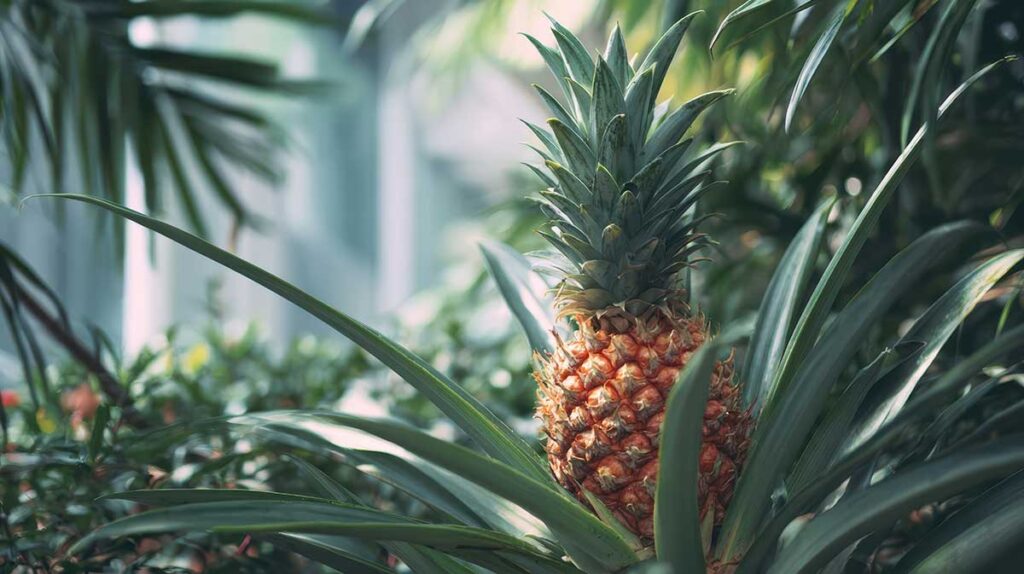
Pineapple is one of the more unusual fruits you can include in a hydroponic-style garden. Unlike tomatoes or strawberries, however, it isn’t a crop I’d grow with its roots continuously submerged in nutrient solution. Pineapple is better suited to a well-drained soilless substrate supplied with water and nutrients through drip irrigation.
The plant itself stays relatively compact compared with sprawling crops such as melons, although its stiff, spreading leaves still need more room than they first appear to. Pineapple also likes warmth and strong light, making it better suited to a greenhouse, bright indoor growing area, or warm climate than a cool growing space.
Ideal Growing Conditions
| Requirement | Recommended Range |
|---|---|
| pH | 5.5–6.0 |
| EC | 1.8–2.4 mS/cm |
| Root-Zone Temperature | 68–75°F (20–24°C) |
| Air Temperature | 70–85°F (21–29°C) |
| Light | Strong light; supplemental lighting may be needed indoors |
| Humidity | 50–70% |
You can start a plant from the crown of a store-bought pineapple, but a healthy nursery plant or established offshoot can shorten the wait. Whichever method you choose, good drainage around the roots is important. The growing medium should hold enough moisture to support the plant without remaining constantly waterlogged.
Patience is the biggest requirement. Pineapples mature much more slowly than the annual fruiting crops elsewhere in this guide. A plant may need roughly 18–24 months or considerably longer to produce a mature fruit, especially when started from a crown. Temperature, light, plant maturity, and propagation method can all influence the timeline.
A pineapple plant generally produces one main fruit from its central growing point. That doesn’t necessarily mean the end of your plant, though. Mature plants can produce offshoots—often called pups or suckers—that can be separated and grown into new plants.
Difficulty: ⭐⭐⭐ Advanced
Recommended system: Well-drained soilless substrate with drip fertigation
Best for: Patient growers with warm conditions and strong light
Growing tip: If your goal is fruit rather than simply growing pineapple as a novelty, starting with an established pup or nursery plant can save considerable time compared with rooting a supermarket pineapple crown.
See also
What About Hydroponic Grapes?

Grapevines can also be grown without traditional garden soil, but they’re not one of my first recommendations for a home hydroponic setup. Grapes are long-lived woody vines that eventually need substantial root space, strong support, regular pruning, and plenty of light.
If you want to experiment with them, a large container filled with a well-drained soilless substrate and supplied through drip fertigation is more practical than trying to grow a mature grapevine in a small NFT or DWC system. You’ll also need a sturdy trellis and enough permanent space for the vine as it matures.
For most beginners, strawberries, tomatoes, peppers, or cucumbers offer a much easier introduction to growing fruit hydroponically. Grapes make more sense as a long-term project once you’re comfortable managing larger perennial plants.
What About Hydroponic Raspberries?

Yes, raspberries can be grown hydroponically, although they’re considerably more demanding than strawberries. Raspberry plants develop perennial crowns and canes, so they need more root space and physical support than compact berry plants.
For home growers, a drip-fed container filled with a well-drained soilless substrate is one of the more practical approaches. This gives the root system room to develop while allowing you to control irrigation and nutrients. A trellis or other support will also be needed as the canes grow.
Cultivar selection matters because raspberry plants vary considerably in size and growth habit. Compact varieties are easier to accommodate in a greenhouse or controlled growing area than vigorous plants that produce long canes.
Raspberries also have a more complicated production cycle than strawberries. Depending on the type, fruit develops on first-year or second-year canes, which affects how the plants should be pruned and managed. That’s one reason I wouldn’t recommend raspberries as a first hydroponic fruit crop.
Difficulty: ⭐⭐⭐ Advanced
Recommended system: Drip-fed container with soilless substrate
Best for: Experienced growers who want to experiment with perennial berries
Growing tip: Before buying a raspberry plant, find out whether it’s primocane-fruiting or floricane-fruiting. That distinction determines which canes produce berries and how you’ll need to prune the plant.
Which Hydroponic Fruit Is Best for You?
Choosing among the best hydroponic fruits depends on more than which fruit you like eating. Available space, growing system, light, and the amount of time you’re willing to spend managing the plants all make a difference. Strawberries can fit into a relatively small setup, while melons and watermelons need considerably more room and support.
Here’s a quick way to narrow down your options:
| Your Goal | Good Choices |
|---|---|
| Best for Beginners | 🍓 Strawberries |
| Relatively Quick Harvest | 🥒 Cucumbers, 🍓 Strawberries |
| Productive Fruiting Crops | 🍅 Tomatoes, 🌶️ Peppers |
| Best for Smaller Spaces | 🍓 Strawberries, 🌶️ Peppers |
| Best for Vertical Growing | 🍓 Strawberries, 🥒 Cucumbers |
| Best Long-Term Project | 🍋 Dwarf Citrus, 🫐 Blueberries |
| Best Tropical Project | 🍍 Pineapple |
| Best Challenge for Experienced Growers | 🍉 Mini Watermelons, 🍈 Melons |
If this is your first attempt at growing fruit hydroponically, strawberries are the easiest place to start. Their plants are relatively compact, they work with several types of hydroponic systems, and you won’t need the heavy trellising required by larger fruiting crops.
Once you’re comfortable monitoring pH, nutrients, lighting, and the reservoir, cucumbers, peppers, and tomatoes are logical next steps. Melons and mini watermelons require more space and structural support, while blueberries, dwarf citrus, and pineapple make more sense for growers willing to take on a longer-term project.
Tips for Growing Hydroponic Fruits Successfully
Even the best hydroponic fruits generally ask more from a growing system than leafy greens. They grow larger, remain in the system longer, and often need additional light and physical support. They grow larger, remain in the system longer, and often need additional light and physical support. Instead of constantly changing the nutrient solution or trying to push faster growth, focus on keeping the growing environment stable.
Keep pH and Nutrients Within the Right Range
Most of the fruits in this guide perform well somewhere around pH 5.5–6.5, but don’t treat that as a universal target. If you’re new to adjusting nutrient solutions, our guide to the best pH for hydroponics explains why the target range matters.
Check the recommended range for the crop you’re growing and monitor both pH and EC regularly. As plants become larger and begin flowering and fruiting, they can use water and nutrients much more quickly, so reservoir conditions may change faster than they did when the plants were young.
Avoid responding to every small reading by adding more fertilizer or pH adjuster. Look for meaningful changes and keep the solution within the appropriate range for the crop.
Give Fruiting Plants Enough Light
Light is one of the easiest things to underestimate when moving from lettuce and herbs to tomatoes, peppers, strawberries, or melons. Fruiting crops need enough light not only to maintain foliage but also to support flowering and fruit development.
Indoors, a suitable full-spectrum grow light may need to operate for roughly 12–16 hours per day, depending on the crop, light intensity, and growing environment. Simply leaving a weak light on for longer isn’t a substitute for providing adequate intensity.
Keep the canopy in mind as plants grow. A light positioned correctly above young seedlings may need to be raised, repositioned, or supplemented once the plants become larger.
Pay Attention to the Root Zone
Don’t focus entirely on what you can see above the reservoir. Roots need oxygen as well as water and nutrients, and problems below the surface can quickly affect the rest of the plant.
Keep reservoirs clean, remove fallen plant material, and provide adequate aeration or circulation for systems that require it. Many hydroponic crops perform well with a root-zone temperature around 65–72°F (18–22°C), although the preferred range varies by crop.
Check the roots occasionally as part of your normal maintenance. Changes in texture, odor, or overall root condition can provide an early warning that something isn’t right.
Plan for Support and Pollination Before You Need Them
Tomatoes, cucumbers, melons, watermelons, and other large fruiting plants become much harder to manage once they’re mature. Install stakes, cages, or trellises while the plants are still small rather than trying to add them after branches and vines are carrying fruit.
Melons and watermelons trained vertically may also need individual slings to support developing fruit.
Indoor pollination deserves similar planning. Tomatoes and peppers are self-fertile but benefit from movement that helps release pollen. Melons and watermelons produce separate male and female flowers and may require hand pollination when insects aren’t present. Some cucumber varieties can produce fruit without pollination, which is one reason parthenocarpic cultivars are convenient for indoor gardens.
Keep the System Clean and Inspect Plants Regularly
Hydroponics eliminates weeds and many problems associated with garden soil, but it doesn’t eliminate pests or disease. Aphids, spider mites, whiteflies, thrips, algae, and root problems can still appear.
Look over the leaves, stems, flowers, roots, and reservoir whenever you perform routine maintenance. It’s much easier to deal with a small problem than one that has spread throughout a densely planted system.
Top off the reservoir as needed and refresh the nutrient solution according to the requirements of your particular system rather than relying on one fixed schedule for every hydroponic garden. Remove damaged leaves and old plant material, and harvest ripe fruit regularly so plants remain easier to inspect and manage.
The goal isn’t to make constant adjustments. A successful hydroponic fruit garden usually comes down to maintaining stable pH and nutrients, adequate light, a healthy root zone, good plant support, and regular observation.
Common Mistakes to Avoid When Growing Hydroponic Fruits
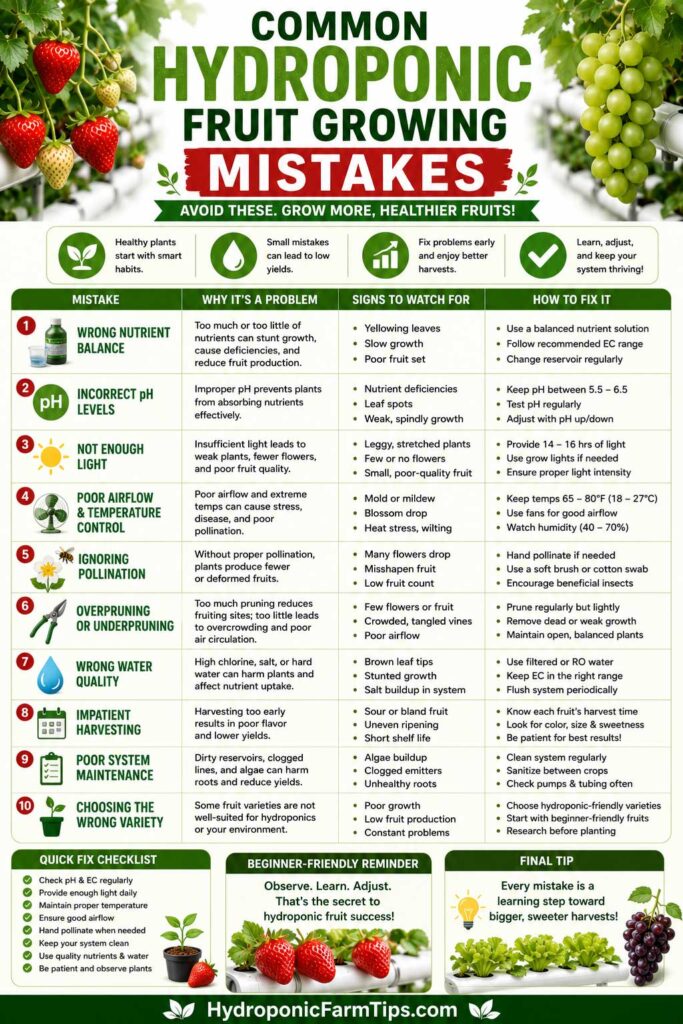
Most problems with hydroponic fruit don’t come from one dramatic mistake. They’re more often the result of small issues—pH drifting for too long, plants outgrowing their lights, or vines becoming too large for the support system. Here are a few problems worth watching for.
Treating Every Fruit the Same
Strawberries, blueberries, tomatoes, and pineapples don’t have identical growing requirements. One nutrient strength, pH target, container size, or hydroponic system won’t necessarily work equally well for all of them.
Use the requirements for the specific crop you’re growing rather than applying the same settings across your entire garden. This is particularly important with blueberries, which prefer a more acidic root zone than most of the other fruits in this guide.
Trying to Fix Problems With More Nutrients
When a plant looks weak or stops producing, adding fertilizer can seem like the obvious solution. But poor growth can also come from incorrect pH, insufficient light, root problems, temperature stress, or other environmental conditions.
Check the entire growing environment before increasing nutrient strength. Overfeeding a stressed plant can create another problem instead of solving the original one.
Underestimating Mature Plant Size
A young cucumber, tomato, or melon plant doesn’t give you much indication of how much space it will eventually occupy. By the time vines are tangled together and fruit is developing, adding a trellis or moving plants apart becomes difficult.
Plan spacing, lighting, root volume, and structural support based on the mature plant, not the seedling sitting in front of you.
Forgetting About Pollination Indoors
Flowers don’t automatically guarantee fruit. Tomatoes and peppers benefit from vibration or airflow that helps release pollen, while melons and watermelons may need pollen transferred between male and female flowers when insects aren’t available.
Learn how your particular crop is pollinated before flowering begins. This can save a lot of confusion when an otherwise healthy plant produces plenty of flowers but little fruit.
Reacting Too Late
Hydroponic systems can change quickly, particularly when large fruiting plants are consuming significant amounts of water. Waiting until leaves are severely wilted, roots smell unpleasant, or pests have spread throughout the canopy makes recovery much harder.
Make a quick inspection part of your normal routine. Check the reservoir, roots, leaves, flowers, and developing fruit regularly and look for changes rather than waiting for obvious damage.
The biggest mistake is assuming that hydroponics runs itself once the system is assembled. Automation can handle pumps, lights, and irrigation schedules, but regular observation is still one of the most important tools a grower has.
Frequently Asked Questions About Best Hydroponic Fruits
Can all fruits be grown hydroponically?
Many fruiting plants can be grown without traditional soil, but that doesn’t mean every fruit is practical for a home hydroponic garden. Large woody fruit trees such as apples, peaches, and pears require considerable root space and years of growth, making them poor choices for most home systems.
Strawberries, tomatoes, peppers, and cucumbers are much more manageable. Even perennial crops such as blueberries and dwarf citrus can be grown using soilless substrate and controlled fertigation, although they require more space, time, and experience.
What Are the Best Hydroponic Fruits for Beginners?
Strawberries are one of the best choices for beginners. They’re relatively compact, work with several hydroponic systems, and don’t require the large trellises or containers needed for crops such as tomatoes and melons.
Cucumbers are another relatively approachable option once you’re comfortable managing a hydroponic system, although their fast-growing vines need more water, root space, and structural support.
Which Hydroponic Fruit Grows the Fastest?
Cucumbers are among the quicker fruiting crops in this guide, with some varieties reaching harvest in approximately 50–70 days from planting under suitable conditions.
Strawberries can also begin producing relatively quickly when you start with established transplants or rooted runners. The exact timing depends on the cultivar, starting plant size, light, temperature, and overall growing conditions.
Do Hydroponic Fruits Taste as Good as Soil-Grown Fruits?
They can. Flavor depends on the crop and cultivar as well as factors such as light, nutrition, temperature, maturity at harvest, and overall plant health.
Growing hydroponically doesn’t automatically make fruit taste better or worse than fruit grown in soil. A well-managed hydroponic plant can produce excellent fruit, while poor lighting, nutrition, or harvesting too early can affect quality regardless of the growing method.
For a closer look at nutrition rather than flavor, see our guide to whether hydroponic vegetables are less nutritious than soil-grown crops.
Do Hydroponic Fruit Plants Need Pollination?
It depends on the crop. Tomatoes and peppers have self-fertile flowers, but movement from airflow or gentle vibration can help release pollen when they’re grown indoors. Melons and watermelons produce separate male and female flowers and may require hand pollination when insects aren’t available.
Some cucumber cultivars are parthenocarpic, meaning they can develop fruit without pollination, which makes them particularly convenient for indoor growing. Pollination requirements for blueberries and other perennial fruits can vary by cultivar.
What Is the Best Hydroponic System for Growing Fruit?
There isn’t one system that’s best for every fruit. The size and growth habit of the plant should guide your choice.
NFT and vertical systems work particularly well for strawberries because their plants and root systems are relatively compact. Dutch buckets and drip-fed containers are better suited to larger crops such as tomatoes, peppers, cucumbers, melons, and mini watermelons.
Long-lived plants such as blueberries and dwarf citrus are better suited to drip irrigation with a supportive soilless substrate, while pineapple also benefits from a well-drained substrate rather than having its roots continuously submerged in nutrient solution.
The best system is one that provides enough root space, water, nutrients, oxygen, and physical support for the crop at its mature size.
How Do You Grow a Hydroponic Fruit Tree?
For most home growers, fruit trees are better suited to soilless substrate culture with drip fertigation than to systems such as NFT or DWC. A dwarf citrus tree, for example, can be planted in a large container filled with a well-drained growing medium and supplied with water and hydroponic nutrients through drip irrigation.
The container needs enough room for the developing root system, while the tree needs strong light and adequate space for its mature canopy. Because fruit trees are long-lived plants, you’ll also need to monitor nutrition, irrigation, root-zone conditions, and plant size over a much longer period than you would with strawberries or cucumbers.
Choose a dwarf or compact fruit tree whenever possible. Even then, hydroponic or soilless fruit trees are better suited to experienced growers with enough permanent growing space.
Affiliate disclosure: This article may contain affiliate links. If you purchase through one of these links, we may earn a commission at no additional cost to you.
Recommended Products for Growing Hydroponic Fruits
You don’t need to buy every hydroponic accessory available to grow the best hydroponic fruits successfully. A few reliable tools can make it much easier to monitor the nutrient solution, provide adequate light, and support larger fruiting plants.
| Product | Why It’s Useful | Best For | Buy on Amazon |
|---|---|---|---|
| Full-Spectrum LED Grow Light | Provides supplemental light when natural sunlight isn’t sufficient. | Indoor fruiting plants | Check Price |
| Digital pH Meter | Makes it easier to monitor changes in nutrient-solution pH. | Most hydroponic systems | Check Price |
| EC/TDS Meter | Helps monitor the concentration of dissolved nutrients in the reservoir. | Nutrient management | Check Price |
| Hydroponic Nutrients for Fruiting Plants | Provides essential macro- and micronutrients in a form designed for hydroponic growing. | Tomatoes, peppers, strawberries and other fruiting crops | Check Price |
| pH Up & pH Down | Allows small adjustments when nutrient-solution pH moves outside the crop’s preferred range. | Reservoir maintenance | Check Price |
| Air Pump & Air Stones | Adds aeration to systems where roots depend on oxygenated nutrient solution. | DWC and aerated reservoirs | Check Price |
| Dutch Bucket System | Provides substantial root space for larger fruiting plants. | Tomatoes, peppers, cucumbers and melons | Check Price |
| NFT Hydroponic System | Provides a compact growing arrangement for plants with relatively manageable root systems. | Strawberries | Check Price |
| Plant Trellis & Clips | Supports vines and branches as plants become larger and begin carrying fruit. | Tomatoes, cucumbers, peppers and melons | Check Price |
| Fruit Support Slings | Supports developing fruit when heavy vines are trained vertically. | Melons and mini watermelons | Check Price |
Hydroponic Fruits: What to Remember
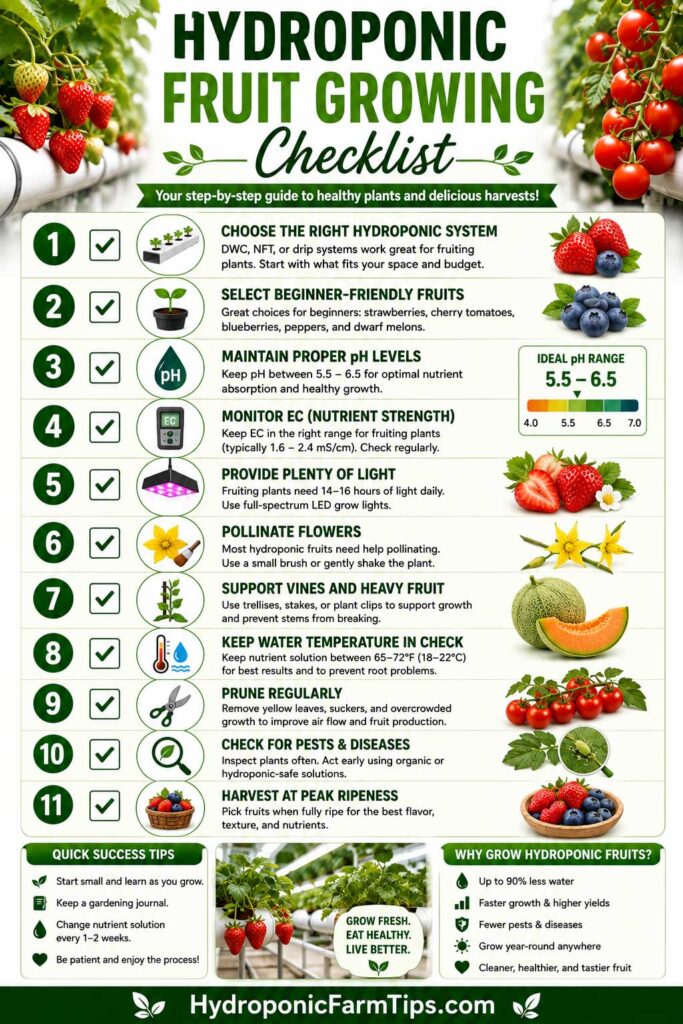
- Strawberries are the best starting point for most beginners. They’re compact, work with several hydroponic systems, and don’t require the heavy support structures needed by larger fruiting plants.
- Cucumbers, tomatoes, and peppers are good next-step crops. They require more root space and plant support, but they’re practical choices once you’re comfortable monitoring a hydroponic system.
- Melons and mini watermelons need considerably more space. Their vines require strong trellising, and fruit grown vertically may need individual slings for support.
- Blueberries, dwarf citrus, and pineapple are long-term projects. They’re better suited to supportive soilless substrates with controlled irrigation than small bare-root hydroponic systems.
- There isn’t one ideal pH, EC, light schedule, or system for every fruit. Use the requirements of the individual crop rather than treating all hydroponic fruit plants the same.
- Plan for the mature plant before you start. Root volume, lighting, trellising, pollination, and available growing space can become much more important once fruiting plants reach full size.
- Consistency matters more than constant adjustment. Regularly check the plants and root zone, keep the system clean, and make changes based on what the crop actually needs.
More Hydroponic Growing Guides
If you’re planning your first fruit garden—or trying to improve an existing system—these HydroponicFarmTips guides cover the next steps in more detail:
- 8 Best Hydroponic Systems for Home — compare the major system types before deciding which setup fits your crops and available space.
- What Is the Best pH for Hydroponics? — learn why pH matters and how to keep the nutrient solution within an appropriate range.
- Hydroponic Nutrient & pH Chart — a useful reference for checking growing ranges for different hydroponic plants.
- Best LED Grow Lights for Hydroponics — compare lighting options for indoor growing.
- Top 10 Hydroponic House Plants — explore additional plants that work well in indoor hydroponic gardens.
- Are Hydroponic Strawberries Safe to Eat? — answers common questions about growing and eating hydroponic strawberries.
- 10 Advantages of Hydroponic Vegetables — learn where hydroponics can offer practical advantages over conventional growing.
- Are Hydroponic Vegetables Less Nutritious? — take a closer look at what research says about hydroponics and nutritional quality.
Start Growing Your Own Hydroponic Fruits
Growing the best hydroponic fruits at home takes a little more planning than growing lettuce or herbs, but you don’t need a large greenhouse to get started. Strawberries can fit into a relatively compact system, while tomatoes, peppers, and cucumbers make good next-step crops when you have more room for roots, lights, and plant support.
If this is your first attempt, start with strawberries. They’re one of the most manageable hydroponic fruits in this guide and give you a chance to learn the basics of monitoring pH, nutrients, lighting, and root health before moving on to larger plants.
From there, you can take on crops that match your space and experience. Tomatoes and peppers need more support, cucumbers grow quickly but require room for their vines, and melons and mini watermelons add the challenge of supporting heavy fruit. Blueberries, dwarf citrus, and pineapple are better treated as long-term projects rather than quick harvests.
Whatever you decide to grow, don’t try to perfect every variable at once. Choose a suitable system, learn what that particular plant needs, and pay attention to how it responds. Those observations will teach you far more than constantly adjusting the reservoir in search of perfect numbers.
Have You Grown Fruit Hydroponically?
If you’ve already experimented with hydroponic fruits, share what you grew and what worked—or didn’t work—for you in the comments below. Your experience may help another grower who’s deciding what to plant next.
And if you’re still planning your first system, save one of the charts or Pinterest guides from this article so you can refer back to the growing ranges and system recommendations when you’re ready to start.