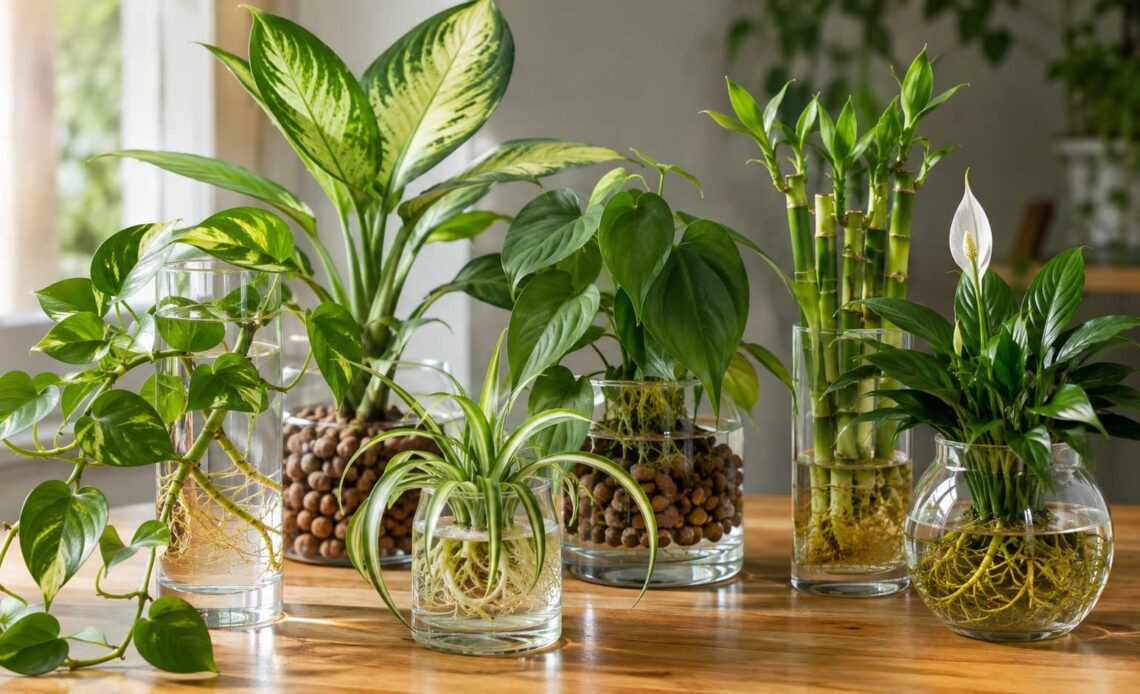
Growing houseplants doesn’t always require a bag of potting soil. Many popular indoor plants can adapt surprisingly well to hydroponic growing, where their roots receive water and nutrients without traditional soil.
Some of the best hydroponic house plants are varieties you may already have at home, including pothos, philodendron, peace lily, spider plant, and lucky bamboo. Many are easy to propagate from cuttings, tolerate typical indoor conditions, and can grow in anything from a simple water-filled container to a more complete hydroponic setup.
Going soil-free can also make indoor gardening cleaner and gives you a clear view of what’s happening around the roots. However, growing a plant in water isn’t quite as simple as filling a vase and forgetting about it. Light, oxygen, nutrient strength, water quality, and regular maintenance still matter.
In this guide, we’ll look at 10 of the best hydroponic house plants, what each one needs, and how to keep them healthy indoors.
Can Houseplants Really Grow Hydroponically?
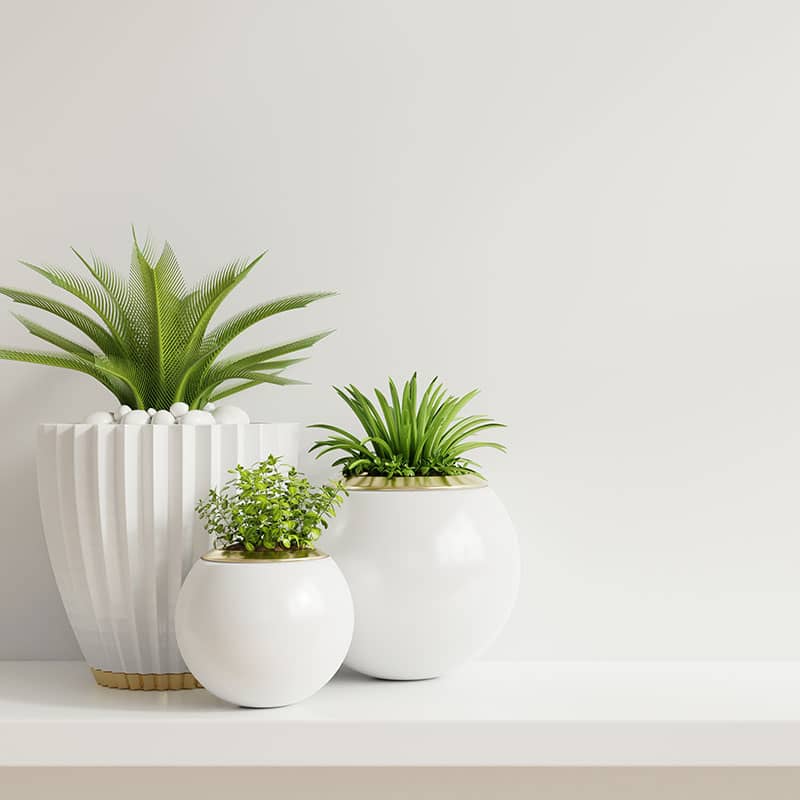
Yes. Many common houseplants can grow successfully without soil, especially species that readily produce roots from stem cuttings. Pothos, philodendron, spider plants, lucky bamboo, and several other tropical houseplants are particularly easy to grow this way.
Instead of getting water and minerals from potting soil, the roots receive what they need from water and a properly diluted hydroponic nutrient solution. Depending on the plant, you can use a simple container filled with water or move to a more traditional hydroponic setup with an inert growing medium.
For beginners, starting with a cutting is often easier than removing an established plant from soil. Place a healthy cutting in clean water with at least one node submerged, while keeping the leaves above the waterline. Once a healthy root system develops, you can begin introducing a diluted hydroponic nutrient solution.
If you’re transferring an established houseplant from soil, gently remove as much potting mix as possible from the roots and rinse away the remaining loose material with room-temperature water. Avoid aggressive scrubbing, which can damage fine roots.
The first few weeks may require a little patience. Roots that developed in soil have to adjust to a much wetter environment, and some plants handle that transition better than others. Watch for new root growth, keep the water clean, and remove any roots that become soft, brown, or mushy.
Quick Comparison of the Best Hydroponic House Plants
| Houseplant | Light | Difficulty | Easy to Propagate in Water? | Best For |
|---|---|---|---|---|
| Pothos | Low to bright indirect | Very easy | Yes | Beginners |
| Arrowhead Vine | Medium to bright indirect | Easy | Yes | Fast-growing foliage |
| Philodendron | Medium to bright indirect | Very easy | Yes | Beginners |
| Peace Lily | Medium indirect | Moderate | Better as an established plant | Flowering foliage |
| Chinese Money Plant | Bright indirect | Moderate | Yes | Compact spaces |
| Dracaena | Medium to bright indirect | Easy | Yes | Taller indoor displays |
| Dieffenbachia | Medium to bright indirect | Moderate | Yes | Large tropical foliage |
| Chinese Evergreen | Low to medium indirect | Easy | Yes | Lower-light rooms |
| Spider Plant | Medium to bright indirect | Very easy | Yes | Hanging displays |
| Lucky Bamboo | Low to bright indirect | Very easy | Yes | Simple water culture |
Have pets at home? Some popular houseplants on this list, including pothos, philodendron, peace lily, Dieffenbachia, Chinese evergreen, and Dracaena, can be harmful to cats or dogs if chewed or ingested. Check the ASPCA’s plant database before placing hydroponic houseplants where pets can reach them.
What Are the 10 Best Hydroponic House Plants?
Not every houseplant responds equally well to growing without soil. The easiest choices tend to be adaptable tropical plants that root readily in water and tolerate typical indoor conditions.
For beginners, pothos, philodendron, spider plants, and lucky bamboo are among the easiest options. Other popular houseplants, including peace lilies, Chinese evergreens, and Dieffenbachia, can also adapt to hydroponic growing when their roots receive enough oxygen and the nutrient solution is properly maintained.
Here are 10 of the best hydroponic house plants to consider for your indoor garden.
1. Pothos (Devil’s Ivy)
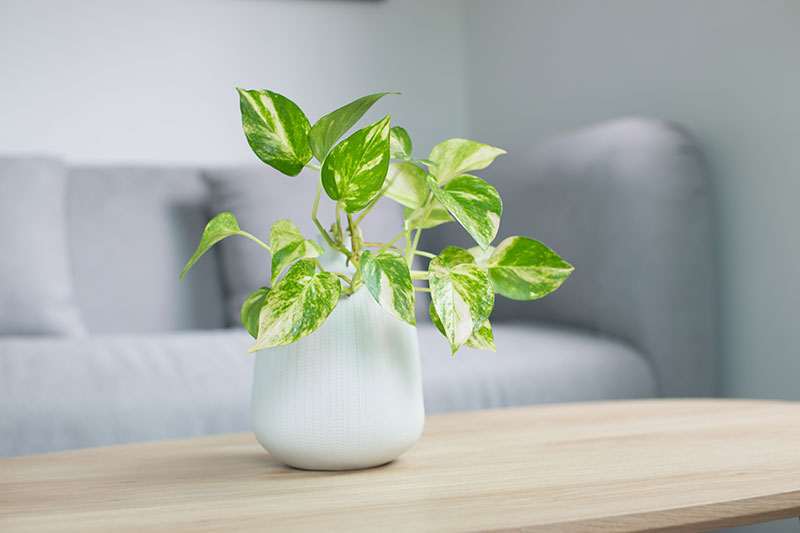
Pothos (Epipremnum aureum), commonly called Devil’s Ivy, is one of the easiest hydroponic house plants for beginners. It roots readily in water, adapts well to indoor conditions, and doesn’t require much attention once established.
You can recognize pothos by its heart-shaped, waxy leaves, which may be solid green or patterned with yellow, cream, or white depending on the variety. Its trailing growth also makes it versatile: let the vines cascade from a shelf or hanging container, prune them for a fuller plant, or provide support and allow them to climb.
Pothos tolerates lower-light conditions, but it generally grows more vigorously in bright, indirect light. Avoid prolonged direct sunlight, which can scorch the foliage.
It’s also one of the easiest houseplants to propagate for hydroponic growing. Take a healthy stem cutting with at least one node, place the node in clean water, and keep the leaves above the waterline. Once a healthy root system develops, the plant can continue growing in water or be transitioned to a hydroponic nutrient solution.
Best for: Beginners, hanging displays, shelves, and easy water propagation
Light: Bright, indirect light; tolerates lower light
Difficulty: Very easy
2. Arrowhead Vine

Arrowhead vine (Syngonium podophyllum) is another excellent choice for growing hydroponically indoors. This tropical houseplant adapts well to water propagation and is known for its attractive foliage, which changes shape as the plant matures.
Young plants typically produce distinctive arrow-shaped leaves. As the plant grows, it develops a more vining habit and the leaves may become more divided. If you prefer a compact, bushier plant, simply prune the longer stems to encourage fuller growth.
Arrowhead vines perform best in bright, indirect light, although they can tolerate somewhat lower light levels. Avoid strong direct sunlight, which may damage the foliage.
One of the easiest ways to start an arrowhead vine hydroponically is with a healthy stem cutting. Cut just below a node and place the node in clean water while keeping the leaves above the surface. Once several healthy roots have developed, you can begin introducing a diluted hydroponic nutrient solution.
Because arrowhead vines can grow quickly under favorable conditions, occasional pruning helps keep the plant manageable indoors.
Best for: Beginners, decorative foliage, shelves, and climbing displays
Light: Bright, indirect light; tolerates moderate light
Difficulty: Easy
3. Philodendron
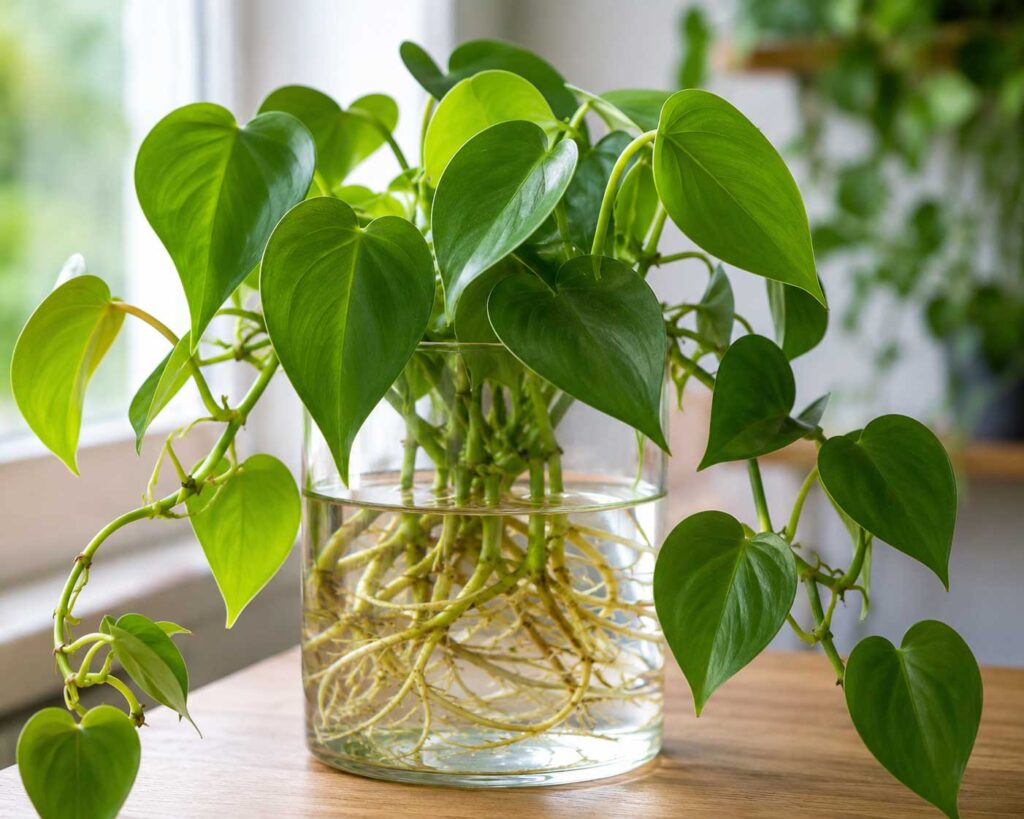
Philodendrons are popular indoor plants for good reason: they’re attractive, relatively forgiving, and many varieties adapt very well to growing in water. Vining types, such as heartleaf philodendron (Philodendron hederaceum), are especially easy to propagate and make excellent hydroponic house plants.
For the easiest start, take a healthy stem cutting that includes at least one node. Place the node in clean water while keeping the leaves above the surface. New roots will gradually develop from the submerged node, and once the root system is established, you can introduce a diluted hydroponic nutrient solution.
Philodendrons generally prefer bright, indirect light but can tolerate lower-light areas. Strong direct sunlight should be avoided because it can scorch the leaves and encourage algae growth when clear hydroponic containers are exposed to light.
If you’re growing a vining philodendron, you can let the stems trail from a shelf or hanging container or provide a support for climbing. Regular pruning can also encourage a fuller, more compact plant.
Best for: Beginners, hanging displays, shelves, and water propagation
Light: Bright, indirect light; tolerates lower light
Difficulty: Very easy
4. Peace Lily

Peace lily (Spathiphyllum) is a beautiful option if you want a hydroponic houseplant with both lush green foliage and the potential to produce distinctive white flowers. Unlike pothos or philodendron, however, an established peace lily can require a little more care when transitioning from soil to water.
Peace lilies prefer bright to moderate indirect light. They can tolerate lower-light conditions, but flowering may be reduced. Avoid prolonged direct sunlight, which can scorch the leaves and heat the water around the roots.
If you’re moving an established peace lily from soil, gently remove the potting mix and rinse the roots with room-temperature water. Place the plant so the roots have access to water while keeping the crown and leaves above the waterline. Monitor the roots during the transition and remove any that become soft or mushy.
For long-term hydroponic growth, provide a properly diluted nutrient solution rather than relying on plain water alone. Check the water regularly, keep the container clean, and refresh the solution as needed to prevent excessive algae, mineral buildup, and stagnant conditions.
Best for: Decorative foliage and flowering indoor displays
Light: Moderate to bright, indirect light
Difficulty: Moderate
5. Chinese Money Plant
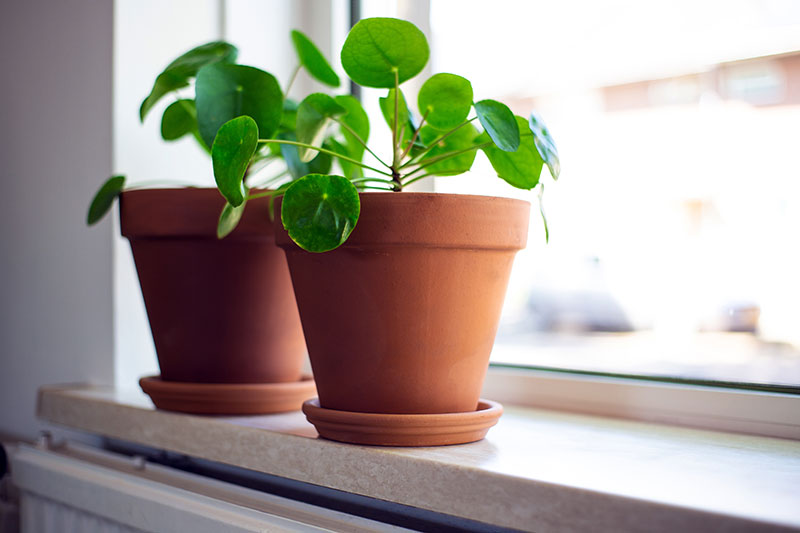
Chinese money plant (Pilea peperomioides) is best known for its round, coin-shaped leaves and compact growth habit. It can also be propagated in water and adapted to hydroponic growing, making it an interesting choice for a small indoor garden.
This plant performs best in bright, indirect light. Too little light can result in slower, less compact growth, while strong direct sunlight may scorch the leaves. Rotating the plant occasionally can also help encourage more even growth because the leaves naturally reach toward the strongest light source.
You can start a Chinese money plant hydroponically from a healthy offshoot or cutting. Allow it to develop a good root system in clean water before gradually introducing a diluted hydroponic nutrient solution.
As the plant settles into its new setup, keep an eye on both the roots and water quality instead of simply topping off the container indefinitely. Refresh the nutrient solution regularly and clean the container when you notice algae or mineral deposits.
Its compact size makes the Chinese money plant a great choice when you want hydroponic greenery without dedicating much space to a larger setup.
Best for: Desks, shelves, small spaces, and decorative displays
Light: Bright, indirect light
Difficulty: Moderate
6. Dracaena

Dracaena is a popular group of tropical houseplants known for its upright growth and long, colorful foliage. Depending on the variety, the leaves may be green or feature stripes and edges in shades of yellow, cream, or red.
Several Dracaena varieties can adapt well to growing without soil, and stem cuttings can be rooted directly in water. Once a healthy root system has developed, the plant can be maintained with a diluted hydroponic nutrient solution.
Dracaena generally prefers bright, indirect light, although many varieties tolerate moderate or lower-light conditions. Keep the plant away from intense direct sunlight, which can scorch the foliage, as well as cold drafts and windows during winter.
Water quality is particularly worth watching with Dracaena. Some varieties can develop brown leaf tips when sensitive to minerals or fluoride in tap water. If this becomes a recurring problem, filtered or distilled water may be worth trying.
Because some Dracaena varieties eventually grow much taller than pothos, Pilea, or spider plants, they’re a good option when you want a larger hydroponic houseplant to add height to an indoor display.
Best for: Taller displays, offices, and tropical foliage
Light: Moderate to bright, indirect light
Difficulty: Easy to moderate
7. Dieffenbachia (Dumb Cane)

Dieffenbachia is a tropical houseplant prized for its large, patterned leaves, which often combine shades of green, cream, and white. It can adapt to hydroponic growing and is a good choice if you want larger, more dramatic foliage in your indoor garden.
One of the easiest ways to start Dieffenbachia without soil is from a healthy stem cutting. Allow the cutting to develop roots in clean water before introducing a diluted hydroponic nutrient solution. Established plants can also be transitioned from soil, although the roots should be cleaned carefully and monitored for signs of rot during the adjustment period.
Dieffenbachia prefers bright, indirect light but can tolerate moderate light. Avoid prolonged direct sunlight, which may scorch the foliage. Varieties with heavier variegation generally benefit from brighter indirect light to maintain their markings.
Keep the nutrient solution relatively mild and watch the plant rather than assuming more fertilizer will produce faster growth. Browning leaf tips, yellowing foliage, or unhealthy roots can indicate that growing conditions need to be adjusted.
One important consideration is toxicity. Dieffenbachia contains insoluble calcium oxalates that can cause significant oral irritation if chewed, so keep the plant where pets cannot reach it.
Best for: Large tropical foliage and decorative indoor displays
Light: Moderate to bright, indirect light
Difficulty: Moderate
8. Chinese Evergreen (Aglaonema)

Chinese evergreen (Aglaonema) is a popular tropical houseplant known for its attractive patterned foliage and ability to handle a range of indoor conditions. Many varieties can also adapt to growing in water, making Aglaonema an appealing option for a hydroponic houseplant display.
Chinese evergreens generally prefer moderate to bright, indirect light. Green-leaved varieties can tolerate lower-light conditions, while plants with more colorful or heavily variegated foliage usually benefit from brighter indirect light to maintain their markings.
To start one hydroponically, you can root a healthy stem cutting in clean water or carefully transition an established plant from soil. If you’re transferring a mature plant, remove as much loose potting mix as possible without damaging the roots and monitor them closely while the plant adjusts.
After the plant has adjusted, use a diluted hydroponic nutrient solution and check the water regularly. Avoid allowing fallen leaves or decaying root material to remain in the container, as this can contribute to poor water conditions.
With its compact growth and wide variety of leaf patterns, Chinese evergreen is a particularly attractive choice for adding color to an indoor hydroponic garden.
Best for: Colorful foliage, offices, shelves, and lower-light areas
Light: Moderate to bright, indirect light; some green varieties tolerate lower light
Difficulty: Easy to moderate
9. Spider Plant

Spider plant (Chlorophytum comosum) is one of the easiest houseplants to propagate in water, making it an excellent choice for beginners experimenting with hydroponic growing.
Mature spider plants produce small plantlets, often called “spiderettes” or “babies,” along long stems. These can be removed from the parent plant and placed in clean water, where they can develop their own root systems. Keep the foliage above the waterline and submerge only the base where the roots will emerge.
Spider plants perform best in bright, indirect light, although they can tolerate moderate light. Too much direct sunlight may scorch the leaves, while insufficient light can result in slower growth and less vigorous plantlets.
When you see a good cluster of healthy roots, you can gradually introduce a diluted hydroponic nutrient solution. Check the roots and water regularly, and refresh the solution rather than continually topping off the same container.
Spider plants look particularly good in hanging containers or on higher shelves, where their arching foliage and developing plantlets have room to cascade.
Best for: Beginners, hanging displays, and easy propagation
Light: Moderate to bright, indirect light
Difficulty: Very easy
10. Lucky Bamboo
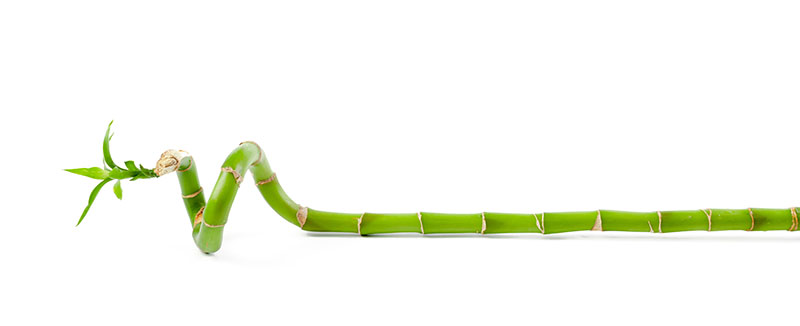
Lucky bamboo (Dracaena sanderiana) is one of the most recognizable houseplants grown in water. Despite its common name, it isn’t a true bamboo. It’s actually a member of the Dracaena group and is particularly well suited to simple water-based growing.
Lucky bamboo can be grown in a narrow vase, glass container, or decorative vessel, sometimes with pebbles or other inert material used to support the stems. Keep the roots submerged while leaving most of the stalk and foliage above the waterline.
The plant prefers bright, indirect light but can tolerate lower-light indoor conditions. Avoid strong direct sunlight, which can scorch the leaves and encourage algae growth in transparent containers.
Water quality can make a noticeable difference with lucky bamboo. If you regularly see yellowing or browning leaf tips when using tap water, try filtered or distilled water instead.
Although lucky bamboo can survive for some time in plain water, long-term growth requires nutrients. Use a very diluted hydroponic nutrient solution rather than adding a strong dose of regular houseplant fertilizer.
With its compact size, distinctive upright stems, and simple care requirements, lucky bamboo is one of the easiest hydroponic house plants for beginners.
Best for: Beginners, desks, offices, and decorative water displays
Light: Low to bright, indirect light
Difficulty: Very easy
See also
How to Grow Houseplants Hydroponically
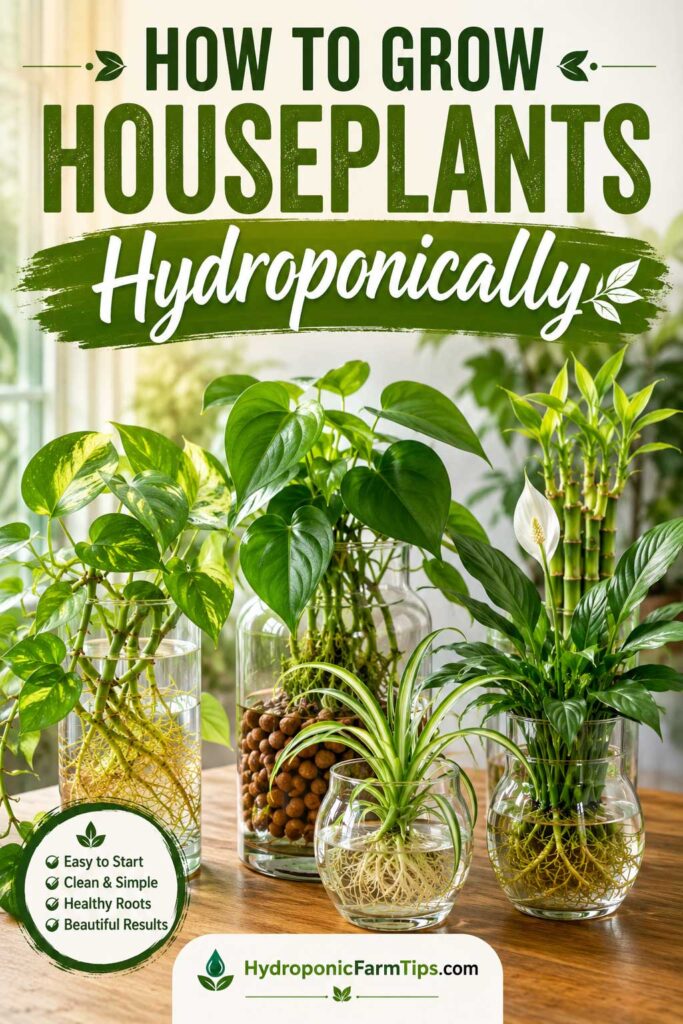
You don’t need a complicated hydroponic system to start growing houseplants without soil. Many of the plants on this list can begin as simple cuttings rooted in water and later receive a diluted hydroponic nutrient solution.
1. Start With a Cutting or Healthy Plant
For plants such as pothos, philodendron, arrowhead vine, and spider plant, starting with a cutting is usually the easiest option.
Choose a healthy stem with at least one node and remove any leaves that would otherwise sit below the waterline. Place the node in clean water while keeping the remaining foliage above the surface.
You can also transition an established houseplant from soil, but this requires more care. Gently remove the plant from its pot, loosen the potting mix, and rinse away the remaining material with room-temperature water without aggressively scrubbing the roots.
2. Choose the Right Container
A simple jar or vase can work for water propagation, while net pots and inert growing media can provide additional support for larger plants.
Opaque or dark containers have an advantage because they limit the amount of light reaching the water, which can help reduce algae growth. If you prefer a clear glass container so you can see the roots, be prepared to clean it more frequently.
Whatever container you choose, make sure the plant’s leaves and crown remain above the waterline.
3. Let New Roots Develop
Cuttings need time to develop healthy roots before moving to a regular hydroponic feeding routine. Begin with clean water and replace it when it becomes cloudy, develops an odor, or accumulates debris.
Don’t worry about reaching an exact number of roots or following a strict number of days. Different houseplants root at different speeds.
4. Introduce Hydroponic Nutrients
Plain water can support propagation, but plants need essential mineral nutrients for sustained growth. In hydroponic systems, most of these nutrients are supplied through the nutrient solution.
Once your plant has developed healthy roots, begin using a hydroponic nutrient formulated for growing plants without soil. Start below the manufacturer’s full-strength recommendation for mature plants and increase gradually if the plant responds well.
Follow the nutrient manufacturer’s instructions and watch how the plant responds.
5. Provide Enough Light
Most hydroponic house plants on this list prefer bright, indirect light. A location near a bright window can work well as long as intense direct sunlight isn’t hitting sensitive foliage for extended periods.
If your home doesn’t receive enough natural light, an indoor grow light can provide more consistent lighting throughout the year.
6. Maintain the Water and Roots
Check your plants regularly rather than simply topping off the same nutrient solution indefinitely.
Remove fallen leaves and other organic material from the container, refresh the nutrient solution periodically, and clean away algae or mineral deposits when they appear.
Healthy roots vary in color depending on the plant and nutrient solution, so color alone isn’t always enough to diagnose a problem. Pay particular attention to roots that become soft, slimy, or foul-smelling, as these can indicate unhealthy root conditions.
Affiliate disclosure: This article may contain affiliate links. If you purchase through one of these links, we may earn a commission at no additional cost to you.
Want an Easier Start? These Basics Cover Most Houseplants
A few basic supplies can make nutrient management, root support, and routine maintenance easier—especially once your plants move beyond the propagation stage.
| Product | Why It’s Useful | Best For | Buy |
|---|---|---|---|
| Hydroponic Nutrients | Provides essential minerals for long-term growth | Established plants | Check Price on Amazon |
| Digital pH Meter | Helps you monitor nutrient-solution pH | Routine maintenance | Check Price on Amazon |
| LECA Clay Pebbles | Supports roots while maintaining air space | Semi-hydroponics | Check Price on Amazon |
| Net Pots | Hold plants and growing media above a reservoir | Larger plants | Check Price on Amazon |
Best Hydroponic Setup for Houseplants
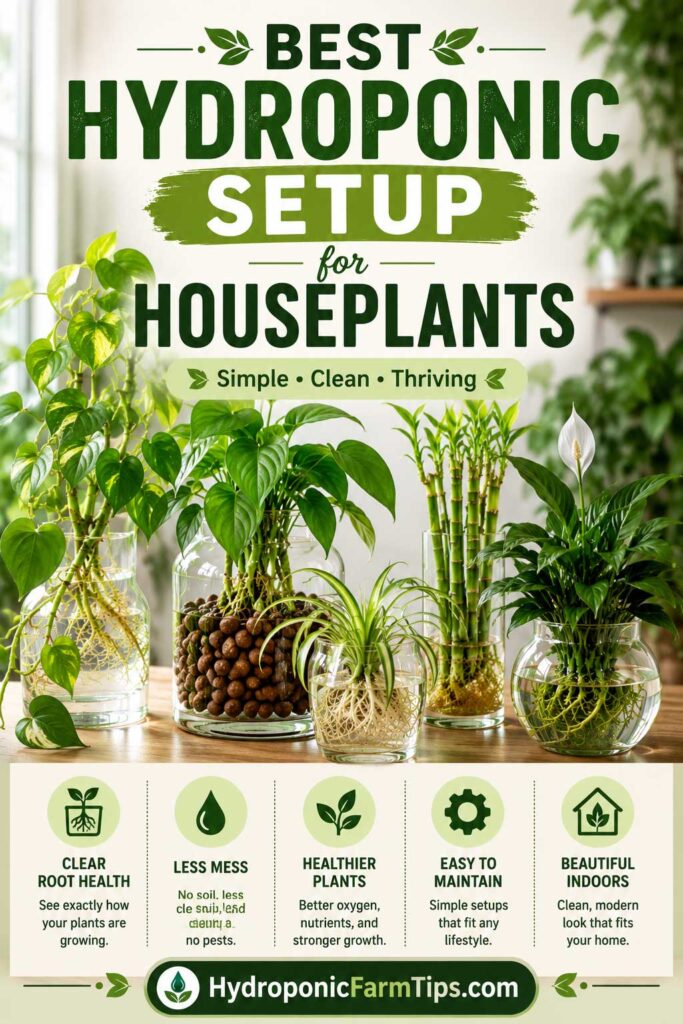
The best setup depends on the type and size of houseplant you’re growing. Unlike lettuce or herbs, most indoor foliage plants don’t require a large or complicated hydroponic system.
Simple Water Culture
For pothos, philodendron, lucky bamboo, spider plants, and other easy-to-root species, a simple container can be enough to get started.
A jar or vase works well for propagation, but for long-term growing you’ll need to pay more attention to nutrients, water quality, and root health. An opaque container can also help limit algae by blocking light from reaching the nutrient solution.
Net Pots and Growing Medium
For larger houseplants that need more physical support, a net pot filled with an inert growing medium can be a better choice.
LECA (expanded clay pebbles) is commonly used because it supports the roots while still allowing plenty of air and moisture around them. Other hydroponic growing media can work as well, depending on the setup.
This approach is particularly useful for plants that become top-heavy as they mature.
Passive Hydroponics
Passive or semi-hydroponic setups are another practical option for houseplants. Instead of continuously pumping nutrient solution around the roots, the plant draws moisture from a reservoir as needed.
This can be a convenient middle ground between growing a cutting in a glass of water and maintaining a larger active hydroponic system.
Active Hydroponic Systems
You can also grow some houseplants in active systems such as deep water culture (DWC), where the roots have continuous access to nutrient solution and additional oxygen is supplied with an air pump and air stone.
For most decorative houseplants, however, a full active system isn’t necessary. Simple water culture or a passive setup is usually easier to maintain indoors.
If you’re interested in growing vegetables, herbs, or larger numbers of plants, our guide to the best hydroponic systems for home growing explains how DWC, NFT, ebb and flow, drip systems, aeroponics, and other methods compare.
Building a Simple Indoor Setup? Start Here
Once you move beyond a cutting in a jar, the right setup can make maintenance much easier. The best choices depend on whether you’re building a passive container or a small active hydroponic system.
| Product | Why We Like It | Best For | Buy |
|---|---|---|---|
| Small Air Pump & Air Stone | Adds oxygen to water-based setups | Larger root systems | Check Price on Amazon |
| Hydroponic Grow Light | Provides consistent light indoors | Dark rooms and winter growing | Check Price on Amazon |
| Hydroponic Reservoir/Container | Blocks light and provides more root space | Long-term growing | Check Price on Amazon |
| Pruning Scissors | Makes clean cuttings for propagation | Pothos, philodendron and Syngonium | Check Price on Amazon |
Common Mistakes When Growing Hydroponic House Plants
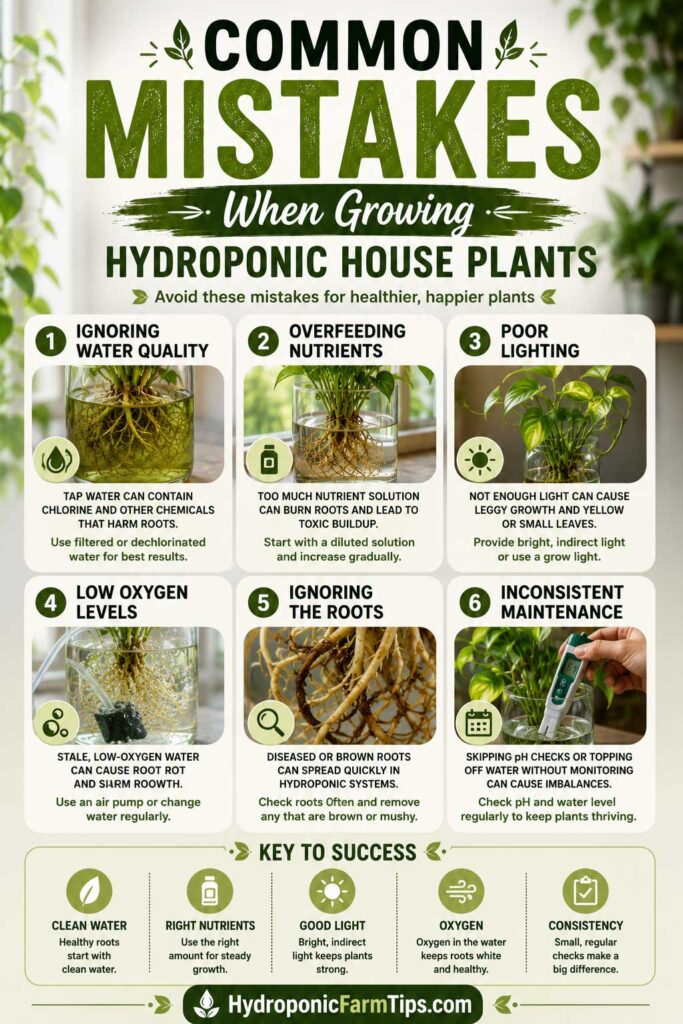
Hydroponic houseplants can be surprisingly easy to maintain, but growing without soil doesn’t mean the plants can be ignored. A few common mistakes can quickly lead to yellow leaves, algae, or unhealthy roots.
Using Too Much Nutrient Solution
More nutrients don’t necessarily mean faster growth. Houseplants generally grow more slowly than many hydroponic vegetables, and an overly concentrated nutrient solution can stress or damage the roots.
Start with a mild concentration and follow the instructions for your hydroponic nutrients rather than adding extra fertilizer.
Ignoring pH
The pH of your nutrient solution affects how easily plants can access essential nutrients. If the pH moves too far outside the appropriate range, nutrients may be present in the water but become more difficult for the plant to absorb.
A digital pH meter makes it much easier to check your solution and make adjustments when necessary. Our nutrient and pH chart for hydroponic gardens provides a useful reference for managing nutrient solutions.
Letting Light Reach the Water
Clear containers look attractive because you can see the roots, but light reaching the nutrient solution can encourage algae growth.
If algae becomes a recurring problem, switch to an opaque container or cover the outside of a clear container while leaving enough access to inspect the roots.
Submerging Too Much of the Plant
The roots need moisture, but the leaves, stems, and crown shouldn’t be unnecessarily submerged. Keeping too much plant tissue underwater can encourage decay.
Position the plant securely so the roots have access to the solution while the foliage remains above it.
Forgetting About Oxygen
Roots need oxygen as well as water and nutrients. Stagnant conditions can become a problem, particularly when a large root system is sitting continuously in nutrient solution.
Depending on your setup, oxygen may come from air space around the roots or from active aeration with an air pump and air stone.
Ignoring the Roots
One advantage of growing houseplants hydroponically is that you can inspect the roots more easily.
Check them whenever you maintain the nutrient solution. Soft, slimy roots accompanied by an unpleasant odor can indicate a developing root problem and shouldn’t be ignored.
If you’re dealing with unhealthy roots, see our guide on how to prevent and treat root rot in hydroponics for a more detailed troubleshooting process.
Frequently Asked Questions About Hydroponic House Plants
Can houseplants grow permanently in water?
Some houseplants can grow in water for long periods, but plain water alone doesn’t provide all the mineral nutrients needed for healthy long-term growth. Once a plant has established roots, a properly diluted hydroponic nutrient solution can provide the essential nutrients it would normally obtain from its growing medium.
What are the easiest hydroponic house plants for beginners?
Pothos, philodendron, spider plant, and lucky bamboo are among the easiest choices for beginners. They adapt well to indoor conditions, are relatively forgiving, and can be started from cuttings or plantlets rooted in water.
Do hydroponic houseplants need fertilizer?
Yes. Plants initially rooting in water can rely on stored resources for a while, but established hydroponic houseplants need essential mineral nutrients for continued growth. Use a fertilizer designed for hydroponics and follow the manufacturer’s dilution instructions rather than using a strong concentration.
How often should I change the water in hydroponic houseplants?
There isn’t one schedule that works for every plant and setup. Check the solution regularly and refresh it before it becomes excessively cloudy, develops an unpleasant odor, or accumulates significant algae or debris. A larger hydroponic reservoir will also be managed differently from a small vase or propagation jar.
Do hydroponic houseplants need sunlight?
They need light, but most of the houseplants in this guide prefer bright, indirect light rather than intense direct sunlight. If natural light is limited, a suitable grow light can provide the additional light needed for healthy indoor growth.
Can I move a houseplant from soil to hydroponics?
Yes, although established soil-grown plants may need time to adapt. Carefully remove the plant from its container, gently loosen the potting mix, and rinse away the remaining loose material with room-temperature water. Monitor the roots closely during the transition and remove any that become soft, mushy, or decayed.
If you eventually decide to move a plant in the opposite direction, our guide on how to transfer plants from hydroponics to soil explains how to make that transition with less stress on the plant.
Ready to Grow Your First Hydroponic Houseplant?
Growing houseplants without soil is an easy way to experiment with hydroponics indoors, and you can start with something as simple as a single cutting and container.
If you’re new to hydroponic house plants, pothos, philodendron, spider plant, and lucky bamboo are some of the easiest places to begin. Once you’re comfortable managing water quality, nutrients, light, and root health, you can experiment with plants such as peace lilies, Chinese evergreens, Dracaena, and Dieffenbachia.
Start with one or two plants rather than trying to build a large collection immediately. Healthy roots and consistent care matter far more than having a complicated setup.
More Hydroponic Growing Guides
Want to keep expanding your indoor hydroponic garden? These guides can help you choose your next plants and improve your setup:
- Best Hydroponic Systems for Home — compare DWC, NFT, Kratky, drip, aeroponics, and other popular systems.
- Best Hydroponic Vegetables — discover productive vegetables you can grow without soil.
- Best Hydroponic Fruits — explore fruiting plants that can be grown hydroponically.
- Nutrient and pH Chart for Hydroponic Gardens — understand pH ranges and nutrient requirements.
- How to Prevent and Treat Root Rot in Hydroponics — learn what unhealthy roots look like and how to prevent common problems.