Hydroponic strawberries are showing up in more grocery stores, greenhouses, and home growing systems. But if they’re grown without soil, are hydroponic strawberries safe to eat?
Yes. When grown and handled properly, hydroponic strawberries are safe to eat. The plants receive the water and essential mineral nutrients they need through a nutrient solution rather than soil. The growing method changes how nutrients reach the roots—not what a strawberry fundamentally is.
Growing strawberries in a controlled environment can also reduce their exposure to soil-borne problems and make pests easier to manage. That doesn’t mean every hydroponic strawberry is pesticide-free or that hydroponics eliminates food-safety risks, but the method itself doesn’t make the fruit unsafe.
Below, we’ll look at how hydroponic strawberries are grown, what goes into their nutrient solution, pesticide use, nutrition, food safety, and how they compare with strawberries grown in soil.
What Are Hydroponic Strawberries?

Hydroponic strawberries are strawberries grown without traditional soil. Instead, their roots receive water and dissolved mineral nutrients through a hydroponic system. The plants still need the same basics as soil-grown strawberries—light, water, oxygen, carbon dioxide, and essential nutrients—but growers have much more control over how those needs are met.
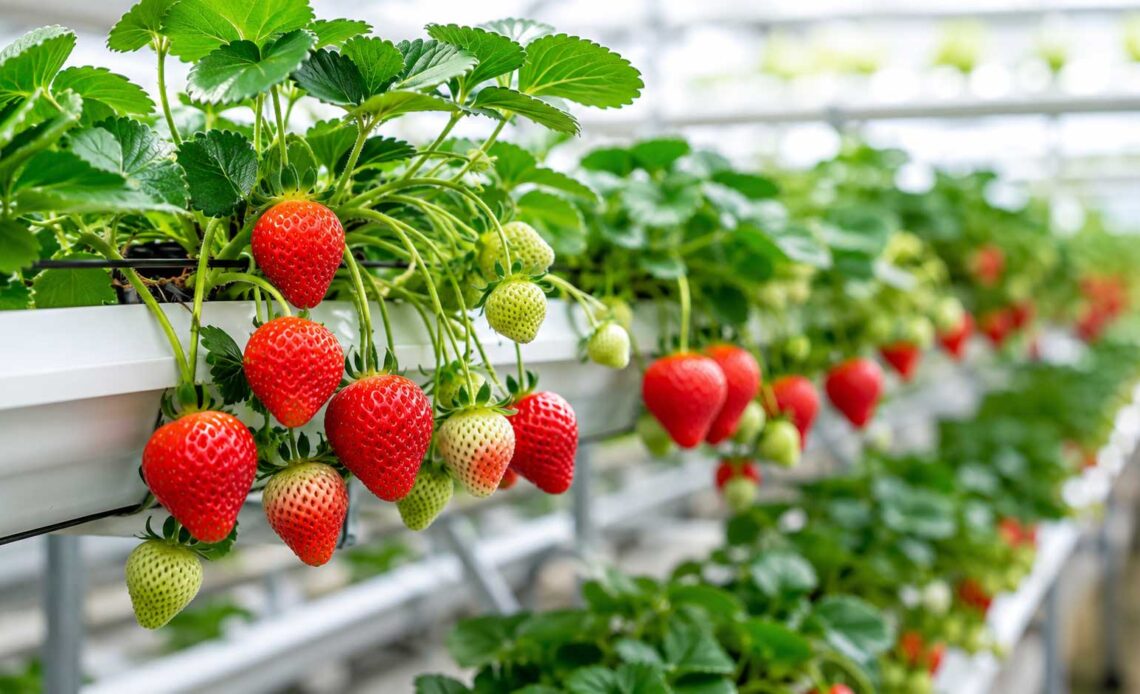
Strawberries are often grown in greenhouses using drip irrigation and substrates such as coco coir, perlite, or other soilless growing media. You may also see strawberries grown in channels or other recirculating hydroponic setups.
The strawberries themselves aren’t a special type of fruit created for hydroponics. Familiar cultivars such as Albion, Seascape, and San Andreas can be grown this way. What changes is the growing environment and how water and nutrients reach the roots.
How Hydroponic Strawberries Grow
A typical setup works something like this:
- Plants are placed in containers, troughs, or growing channels.
- A soilless medium may support the roots and hold moisture.
- Water containing dissolved plant nutrients is delivered to the root zone.
- Excess solution may be collected and reused in recirculating systems.
- Growers monitor factors such as pH, nutrient concentration (EC), temperature, light, and moisture.
This level of control can help growers respond quickly when plants need more water or when nutrient levels drift outside the desired range.
Pros and Cons of Growing Strawberries Hydroponically
Hydroponics gives strawberry growers greater control over water, nutrients, and the root environment, but it also requires more active management than simply planting strawberries in the ground.
Potential advantages include:
- Efficient water use: Irrigation can be precisely controlled, and some systems capture and reuse drainage water.
- Less contact with soil: Elevated growing systems keep the fruit and roots away from agricultural soil.
- Better nutrient control: Growers can monitor and adjust the nutrient solution based on the plants’ needs.
- Extended growing seasons: Greenhouses and other protected environments can produce strawberries outside the traditional outdoor season.
- Easier crop monitoring: Raised plants can make it easier to inspect roots, leaves, flowers, and fruit for problems.
- More comfortable harvesting: Commercial systems often position plants above ground, reducing the need for workers to bend or kneel during harvesting.
Potential disadvantages include:
- Higher startup costs: Growing structures, irrigation equipment, reservoirs, pumps, and environmental controls can require a larger initial investment.
- More monitoring: pH, nutrient concentration, irrigation, temperature, humidity, and plant health may need regular attention.
- Equipment failures can become serious quickly: Problems with pumps or irrigation can leave roots without adequate water or nutrients.
- Pests aren’t eliminated: Mites, thrips, aphids, and other greenhouse pests can still affect strawberry plants.
- Plant diseases can still occur: Removing soil doesn’t prevent problems such as powdery mildew or diseases associated with excessive moisture and poor sanitation.
- Greenhouses may use additional energy: Heating, cooling, ventilation, and supplemental lighting can add to the environmental impact and operating cost. Indoor and greenhouse growers may also need LED grow lights when natural light isn’t sufficient.
Hydroponics solves some of the challenges associated with field production, but it introduces others. The best results come from careful monitoring and good crop management, not simply from removing soil.
Affiliate disclosure: This article may contain affiliate links. If you purchase through one of these links, we may earn a commission at no additional cost to you.
Best Hydroponic Strawberry Growing Essentials
Want to try growing strawberries hydroponically at home? You don’t need commercial greenhouse equipment, but a few basics make it much easier to control nutrients, pH, lighting, and the root environment.
| Product | Why It’s Useful | Best For | Amazon CTA |
|---|---|---|---|
| Hydroponic Growing System | Provides a controlled root environment without soil | Beginners starting from scratch | Check Price on Amazon |
| Strawberry-Friendly Hydroponic Nutrients | Supplies essential macro- and micronutrients | Healthy plant and fruit development | Check Price on Amazon |
| Digital pH Meter | Helps monitor root-zone pH | Preventing nutrient-availability problems | Check Price on Amazon |
| Digital EC Meter | Measures nutrient-solution strength | Fine-tuning nutrient concentration | Check Price on Amazon |
| Full-Spectrum LED Grow Light | Supplements natural light indoors | Indoor and low-light growing | Check Price on Amazon |
Hydroponic Strawberries: Quick Facts
| Feature | What to Know |
|---|---|
| Safe to Eat? | ✅ Yes, when properly grown, harvested, stored, and handled |
| Growing Method | Grown without traditional agricultural soil |
| Nutrient Source | Essential mineral nutrients dissolved in irrigation water |
| Pesticide-Free? | Not necessarily—hydroponic does not mean pesticide-free |
| Nutrition | Can be comparable to soil-grown strawberries |
| Water Use | Can be highly water-efficient, especially in well-managed recirculating systems |
| Root-Zone pH | Typically maintained in a slightly acidic range; exact targets vary by system and growing conditions |
| Growing Environment | Commonly greenhouses and other protected growing environments |
| Food-Safety Risk | Not eliminated; water quality, sanitation, workers, equipment, and handling all matter |
| Washing | Rinse under clean running water before eating |
| Storage | Refrigerate promptly and keep dry until ready to wash and eat |
| Best For | Fresh eating, smoothies, salads, breakfasts, and desserts |
Are Hydroponic Strawberries Safe to Eat?
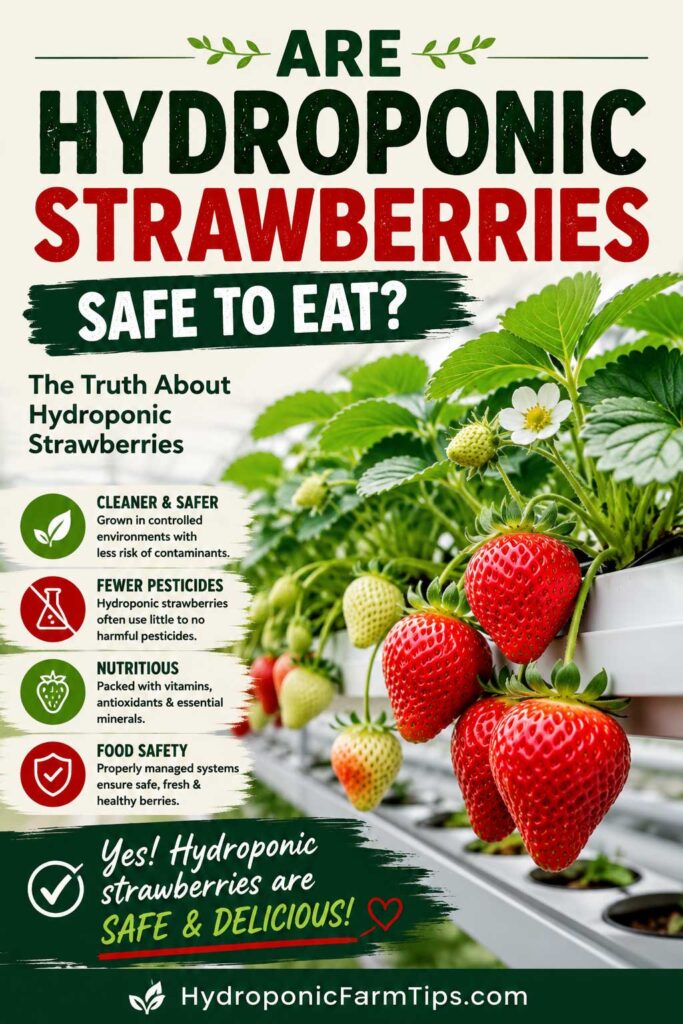
Yes. Hydroponic strawberries are safe to eat when they are grown, harvested, stored, and handled using proper food-safety practices. Growing strawberries without soil does not make the fruit unsafe.
The nutrient solution used in hydroponics contains essential mineral nutrients that strawberry plants need to grow, including nitrogen, phosphorus, potassium, calcium, and magnesium. In soil, these nutrients become available to roots through water in the soil. In hydroponics, growers provide them directly in the irrigation water.
Food safety depends less on whether strawberries are grown in soil or hydroponically and more on the quality of the water, sanitation practices, worker hygiene, equipment cleanliness, and how the fruit is handled after harvest.
Does Hydroponics Reduce Food-Safety Risks?
Growing strawberries in a greenhouse or other protected environment can reduce some sources of contamination. For example, fruit grown above the ground may have less direct contact with soil, and enclosed production can limit exposure to wildlife and some outdoor contaminants.
However, hydroponics isn’t risk-free. Water, equipment, workers, growing media, and handling surfaces can still introduce microorganisms. In a recirculating system, contaminated water can potentially carry microorganisms to other parts of the system.
The FDA specifically treats agricultural water as an important part of produce-safety risk management.
That’s why good hydroponic food-safety practices include:
- Using clean, suitable-quality water
- Cleaning and sanitizing equipment
- Keeping reservoirs and irrigation systems well maintained
- Preventing contamination from workers and handling surfaces
- Monitoring the growing environment
- Following safe harvesting, packing, storage, and transportation practices
A well-managed hydroponic farm can therefore provide a highly controlled growing environment, but the system still has to be managed correctly.
Does the FDA Consider Hydroponic Strawberries Safe?
Hydroponic strawberries aren’t individually “FDA approved” before reaching the grocery store. In the United States, fresh produce growers and handlers may instead be subject to applicable food-safety requirements, including provisions of the FDA Food Safety Modernization Act (FSMA) Produce Safety Rule.
These requirements focus on preventing contamination during growing, harvesting, packing, and holding rather than approving individual strawberries or growing methods.
Some farms also use Good Agricultural Practices (GAPs), food-safety plans, or third-party audits as additional ways to manage and document their practices.
Ultimately, food safety depends on how the strawberries are grown and handled—from irrigation water and system sanitation to harvesting, packaging, refrigeration, and preparation at home.
How Do Hydroponic Strawberries Get Their Nutrients?
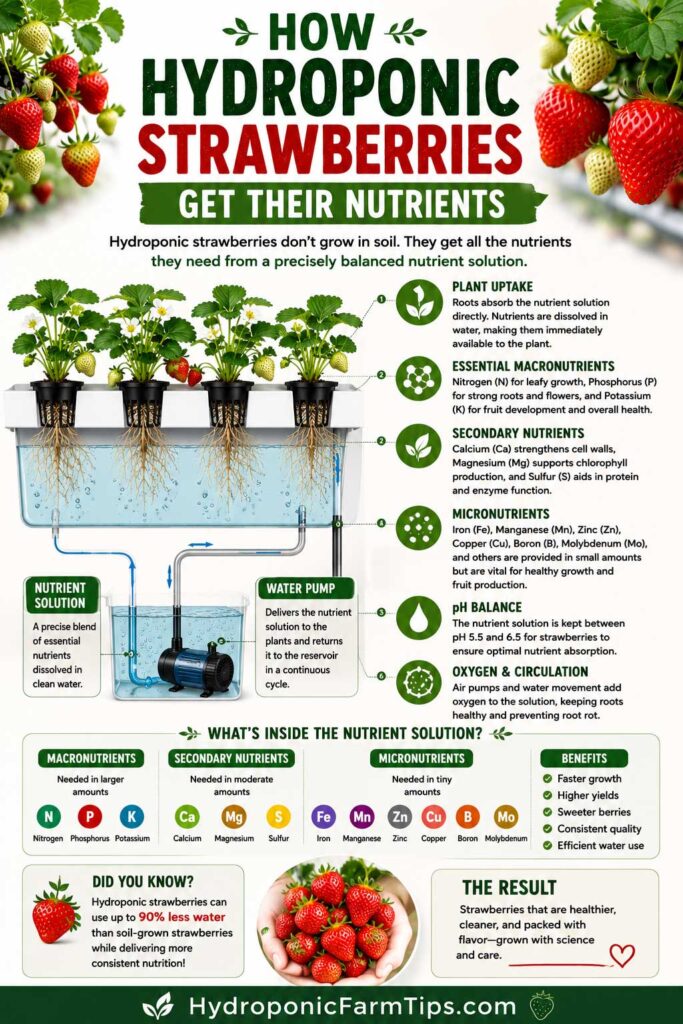
Growing without soil doesn’t mean growing without nutrients. Hydroponic strawberries need the same essential mineral elements as strawberries grown in the ground—the difference is how those nutrients reach the roots.
In soil, mineral nutrients dissolve in soil water before being taken up by the plant. In a hydroponic system, growers dissolve the required nutrients directly into the irrigation water, giving them much more control over what reaches the root zone.
What Nutrients Do Hydroponic Strawberries Need?
Strawberries require a combination of macronutrients and micronutrients throughout their growth cycle.
The major nutrients include:
- Nitrogen (N): Needed for proteins, chlorophyll, and vegetative growth.
- Phosphorus (P): Plays an important role in energy transfer and normal plant development.
- Potassium (K): Supports water regulation and many processes involved in plant growth and fruit development.
- Calcium (Ca): Important for cell walls and healthy developing tissues.
- Magnesium (Mg): A central component of chlorophyll and essential for photosynthesis.
- Sulfur (S): Needed to produce certain amino acids, proteins, and enzymes.
Strawberries also need much smaller amounts of micronutrients, including iron, manganese, boron, zinc, copper, and molybdenum.
The fact that these minerals are supplied through water rather than soil doesn’t make them artificial. Plants absorb mineral nutrients in dissolved forms through their roots regardless of the growing method.
How Growers Control the Nutrient Solution
One advantage of hydroponics is that growers can closely monitor the root-zone environment instead of relying on changing soil conditions.
Important factors include:
- pH and nutrient concentration, which affect how effectively plants can access the nutrients they need.
- Electrical conductivity (EC), which helps indicate the concentration of dissolved salts in the nutrient solution
- Water quality
- Nutrient formulation
- Root-zone temperature
- Irrigation frequency and drainage
Strawberries generally prefer a slightly acidic root environment, although the ideal pH and EC can vary with the cultivar, growth stage, water source, and hydroponic system being used.
Too much fertilizer isn’t better. An overly concentrated nutrient solution can stress the roots, while an inadequate or poorly balanced solution can lead to nutrient deficiencies. Successful hydroponic growing is about maintaining the right balance.
Useful Tools for Managing Strawberry Nutrients
You don’t have to guess what’s happening in the reservoir. A basic pH meter and EC meter can tell you far more than looking at the nutrient solution alone, while the right nutrients and measuring tools make adjustments easier.
| Tool | What It Helps You Monitor | Why It Matters | Amazon CTA |
|---|---|---|---|
| Digital pH Meter | Nutrient-solution pH | Helps keep nutrients available to roots | Check Price on Amazon |
| Digital EC Meter | Dissolved nutrient concentration | Helps prevent overly weak or strong solutions | Check Price on Amazon |
| Hydroponic Nutrients | Plant nutrition | Provides essential mineral nutrients | Check Price on Amazon |
| pH Up & Down Kit | pH adjustment | Makes controlled corrections easier | Check Price on Amazon |
| Measuring Syringes/Cups | Nutrient dosing | Helps avoid inaccurate mixing | Check Price on Amazon |
Are Hydroponic Nutrients Safe?
The word “nutrient solution” can sound unusual if you’re accustomed to growing plants in soil, but it simply refers to water containing dissolved plant nutrients.
Nitrogen, potassium, calcium, magnesium, and other mineral elements are also present in soil-grown agriculture. Hydroponics gives growers a different way to supply and manage them.
For edible crops, growers should use fertilizers intended for hydroponic food production and follow the manufacturer’s directions for concentration and application.
See also
Are Hydroponic Strawberries Pesticide-Free?
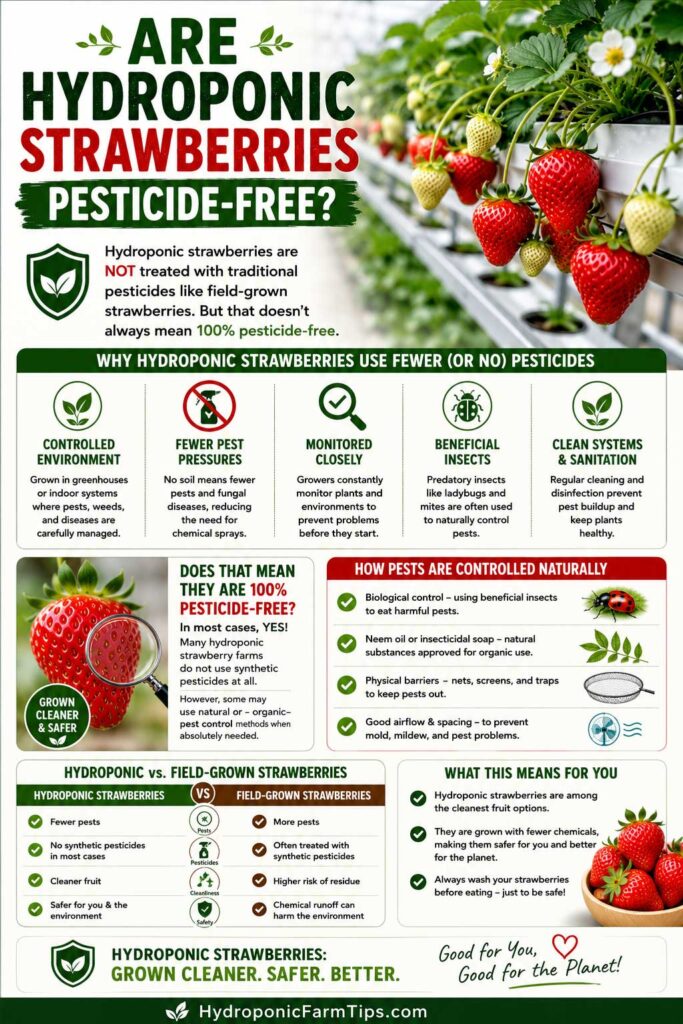
Not necessarily. Hydroponic does not mean pesticide-free. It describes how the strawberry plants are grown and receive water and nutrients, not whether pesticides are used.
Many hydroponic strawberries are grown inside greenhouses or other protected environments. This can make certain pests easier to exclude and gives growers more control over the crop. However, greenhouse strawberries can still be affected by insects, mites, and plant diseases, so some form of pest management is usually necessary.
How Are Pests Controlled in Hydroponic Strawberries?
Many greenhouse growers use Integrated Pest Management (IPM), which combines prevention, monitoring, biological controls, and—when necessary—carefully selected pesticides.
Depending on the operation, pest-management practices may include:
- Screening greenhouse openings to reduce insect entry
- Inspecting plants regularly for early signs of pests or disease
- Removing badly affected leaves or plants
- Managing temperature, humidity, and airflow
- Cleaning tools, containers, and growing areas
- Using biological controls such as predatory mites or parasitoid wasps
- Applying approved pesticides when other control methods aren’t sufficient
The goal of IPM isn’t necessarily to eliminate pesticide use completely. It’s to manage pests effectively while reducing unnecessary treatments.
Can Hydroponic Strawberries Still Be Sprayed?
Yes. A hydroponic strawberry crop may be treated with pesticides if a pest or disease needs to be controlled.
In the United States, pesticide use on food crops is regulated. Growers must follow the pesticide label, including requirements concerning the crop on which it can be used, application rates, timing, and any required interval between application and harvest.
The EPA also establishes pesticide residue tolerances for foods when applicable. These limits specify the maximum amount of a particular pesticide residue legally permitted to remain on a food.
So a package labeled “hydroponically grown” should not be interpreted as meaning “no pesticides were used.”
Are Organic Hydroponic Strawberries Available?
This is a little more complicated.
In the United States, some qualifying hydroponic operations can obtain USDA organic certification if they meet applicable National Organic Program requirements. Organic certification restricts which substances and production practices growers may use, but organic does not mean pesticide-free either.
If avoiding certain pesticides is important to you, look for a recognized organic certification or ask the grower directly about its pest-management practices rather than relying on the word “hydroponic.”
What About Pesticide Residue?
Pesticide residue and pesticide use aren’t the same thing. A crop may have been treated during production without necessarily having a measurable residue by the time you buy it.
Likewise, growing strawberries hydroponically doesn’t guarantee that residues will be absent.
For consumers, the important point is that a “hydroponically grown” label isn’t a pesticide-free claim.
Hydroponic vs. Soil-Grown Strawberries: Is There a Difference?
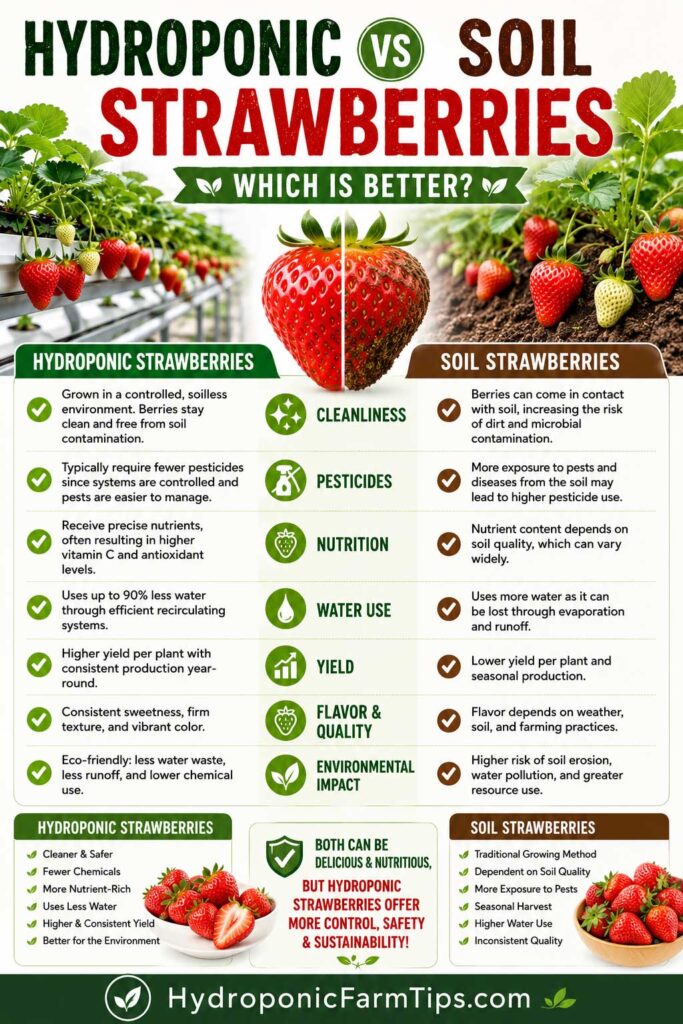
Yes, but the biggest difference is how the plants are grown, not whether the resulting strawberries are inherently healthier or safer.
Soil-grown strawberries obtain mineral nutrients from the soil solution, while hydroponic strawberries receive dissolved nutrients through irrigation water. In both cases, the roots absorb water and essential mineral elements that the plant uses for growth and fruit production.
The growing method can influence water use, pest management, yield, flavor, and even the concentration of certain nutrients, but neither method automatically produces a better strawberry.
Nutrition
Both hydroponic and soil-grown strawberries can be nutritious. Research comparing growing systems has found differences in certain nutrients and plant compounds, but the results aren’t consistent enough to declare one method nutritionally superior.
Cultivar, light, temperature, nutrient management, ripeness at harvest, and storage can all affect the nutritional composition of strawberries.
Taste and Texture
Growing method alone doesn’t determine whether a strawberry will taste good.
Flavor and texture are influenced by the strawberry variety, light levels, temperature, irrigation, nutrition, maturity at harvest, and how long the fruit spends in storage and transportation.
One advantage of greenhouse hydroponic production is that growers can control many of these conditions more closely. Soil-grown strawberries, meanwhile, can be outstanding when harvested locally at peak ripeness.
In practice, a ripe strawberry picked nearby—whether hydroponic or soil-grown—may taste much better than one harvested early and shipped a long distance.
Food Safety
Both growing methods have potential risks and advantages.
| Factor | Hydroponic / Soilless | Soil-Grown |
|---|---|---|
| Root environment | Nutrient solution or soilless substrate | Agricultural soil |
| Water | Irrigation water must be carefully managed | Irrigation water must be carefully managed |
| Soil contact | Fruit can often be kept away from soil | Fruit may have greater opportunity for soil contact |
| Pest management | Often managed in a protected environment | Depends on field conditions and production system |
| Contamination risks | Water, equipment, workers, substrates and handling | Soil, water, wildlife, workers and handling |
| Food safety | Depends on good production and handling practices | Depends on good production and handling practices |
Hydroponics removes direct agricultural soil from the production system, but that doesn’t eliminate microbial food-safety risks. Contaminated water or equipment can still introduce pathogens, and recirculating water can potentially spread contamination within a system.
Likewise, soil-grown strawberries can be produced very safely when farms properly manage irrigation water, sanitation, workers, wildlife intrusion, harvesting, and post-harvest handling.
Environmental Impact
Hydroponic and soilless strawberry production can use water very efficiently, particularly when irrigation and drainage are carefully controlled or reused. Protected production can also produce high yields from a relatively small growing area.
You can explore more of these tradeoffs in our guide to the advantages of hydroponic growing.
But sustainability isn’t determined by water use alone.
Greenhouses may require additional energy for:
- Heating
- Cooling and ventilation
- Supplemental lighting
- Water circulation
- Environmental controls
Field-grown strawberries may require less energy for climate control but can have different challenges involving irrigation, land use, nutrient runoff, weather, and pest management.
Location matters too. A locally produced greenhouse strawberry and a field-grown strawberry transported a long distance can have very different environmental footprints.
Hydroponic vs. Soil-Grown Strawberries at a Glance
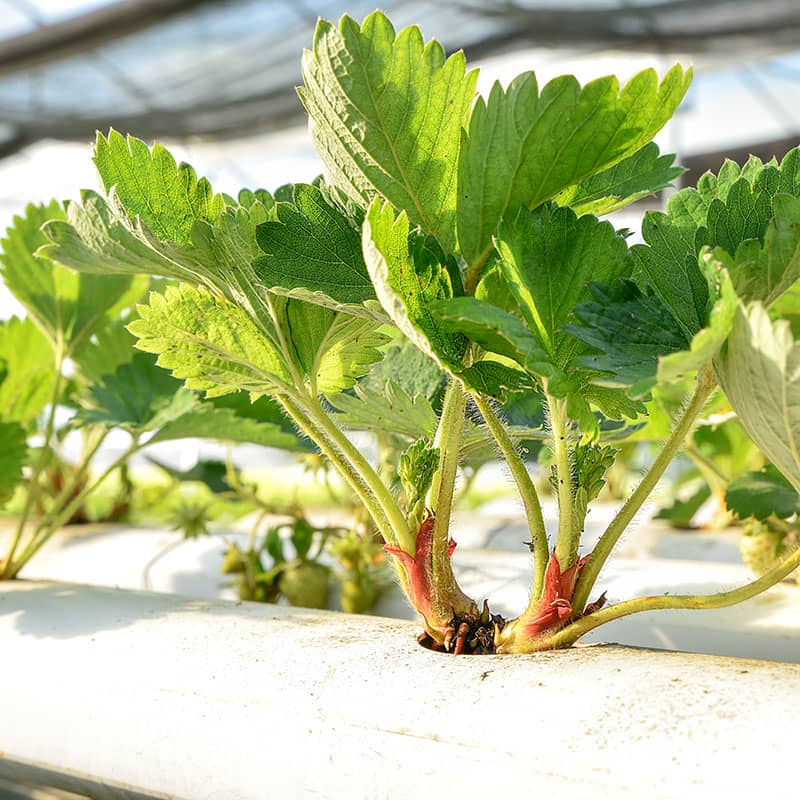
Neither growing method wins in every category.
Hydroponic strawberries can offer greater control over water, nutrients, and the growing environment and may be available outside the traditional local strawberry season.
Soil-grown strawberries benefit from established field-production methods and can produce exceptional fruit, particularly when grown locally and harvested at peak ripeness.
For consumers, the better strawberry is usually the one that’s fresh, ripe, properly handled, and grown by a producer following good agricultural and food-safety practices.
You don’t need to avoid either type simply because of how it was grown.
Are Hydroponic Strawberries Healthy?
Yes. Hydroponic strawberries can be a nutritious addition to your diet, just like strawberries grown in soil.
Growing without soil doesn’t remove the nutrients naturally found in the fruit. Strawberries provide vitamin C, fiber, folate, potassium, manganese, and a variety of naturally occurring plant compounds.
According to USDA nutrition data, one cup of fresh strawberries contains roughly 50 calories and is particularly rich in vitamin C.
Strawberries also contain polyphenols, including anthocyanins, which contribute to their red color, as well as ellagic acid and other flavonoids.
As we explain in our guide to hydroponic vegetable nutrition, growing without soil doesn’t automatically make a crop more or less nutritious.
How to Buy and Handle Hydroponic Strawberries Safely
You don’t need a special set of rules for buying hydroponic strawberries. The same basic food-safety and freshness checks you use for other fresh berries apply here too.
What to Look for When Buying
Choose strawberries that are:
- Firm and plump
- Brightly colored
- Free from visible mold
- Free from major bruising or leaking juice
- Topped with fresh-looking green caps
- Packaged in a clean, undamaged container
Check the bottom of the package as well. Crushed berries, pooled juice, or excessive moisture can be signs that the fruit is beginning to deteriorate.
Don’t assume that a strawberry is safer simply because the package says hydroponic, greenhouse-grown, local, or organic. Those labels describe aspects of how the fruit was produced, but proper harvesting, handling, refrigeration, and sanitation still matter.
Store Them in the Refrigerator
Refrigerate strawberries after bringing them home and keep them cold until you’re ready to use them.
It’s generally best to leave strawberries unwashed during storage. Added moisture can encourage mold and shorten their shelf life.
Before storing the container, take a quick look for damaged or moldy berries. Removing spoiled fruit can help keep it from affecting berries nearby.
Wash Strawberries Just Before Eating
When you’re ready to eat them, rinse the strawberries thoroughly under clean running water.
The FDA advises consumers to wash fresh produce under running water before preparing or eating it. Soap, detergent, bleach, and household cleaning products should not be used to wash fruits and vegetables.
Wash your hands before handling the berries, and use clean utensils and preparation surfaces.
What If One Strawberry Is Moldy?
Strawberries are soft fruits with a high moisture content. If you find a moldy berry, discard it rather than trying to cut away the affected area.
Inspect the berries that were touching it as well and discard any that are visibly moldy or badly deteriorated.
Hydroponic strawberries don’t require any unusual preparation. Good refrigeration, clean handling, and rinsing under running water before eating are the most important steps at home.
Frequently Asked Questions About Hydroponic Strawberries
Are hydroponic strawberries safe to eat?
Yes. Hydroponic strawberries are safe to eat when they’re grown, harvested, stored, and handled using appropriate food-safety practices. Hydroponics changes how the plant receives water and nutrients; it doesn’t make the strawberry itself unsafe.
Do hydroponic strawberries contain pesticides?
They can. Hydroponic doesn’t mean pesticide-free. Greenhouse growers may use biological controls and other Integrated Pest Management techniques, but approved pesticides can also be used when necessary.
If avoiding certain pesticides is important to you, check the product’s certification or ask the grower about its pest-management practices.
Are hydroponic strawberries genetically modified?
Growing a strawberry hydroponically does not make it genetically modified. Hydroponics is a growing method, not a form of genetic engineering.
Many of the same strawberry cultivars grown in fields can also be grown in hydroponic or soilless systems.
Are hydroponic strawberries as nutritious as soil-grown strawberries?
They can be. Both growing methods can produce nutritious strawberries, and neither is consistently superior. Variety, growing conditions, ripeness, and storage can all influence nutritional composition.
Why don’t hydroponic strawberries need soil?
Plants need water, light, carbon dioxide, oxygen around their roots, and essential mineral nutrients. Soil is one way to provide water, nutrients, and physical support, but it isn’t the only way.
Hydroponic systems deliver water and dissolved mineral nutrients directly to the root zone, while a growing medium or other structure may support the plant.
Should you wash hydroponic strawberries?
Yes. Rinse hydroponic strawberries under clean running water before eating or preparing them, just as you would other fresh strawberries.
Don’t wash fresh produce with soap, detergent, bleach, or household cleaning products.
Are hydroponic strawberries better for the environment?
It depends on the farm and growing system.
Hydroponic and soilless production can use water and growing space efficiently, particularly when irrigation is carefully controlled or reused. However, greenhouses may also require energy for heating, cooling, ventilation, lighting, and water circulation.
The overall environmental impact depends on factors such as climate, energy source, water use, system design, transportation distance, and farm management.
So, Are Hydroponic Strawberries Safe to Eat?
Yes. Hydroponic strawberries are safe to eat when they’re grown, harvested, stored, and handled using proper food-safety practices.
Growing strawberries without soil doesn’t make them artificial or nutritionally inferior. Hydroponic plants receive the essential mineral nutrients they need through their irrigation water rather than obtaining them from soil.
Hydroponics also doesn’t guarantee that strawberries are pesticide-free or free from food-safety risks. Water quality, sanitation, pest management, refrigeration, and handling still matter.
For consumers, the advice is simple: choose fresh berries, refrigerate them properly, discard moldy fruit, and rinse strawberries under running water before eating.
Ultimately, how strawberries are grown and handled matters more than whether their roots grew in soil or a hydroponic system.
More Hydroponic Growing Guides
Want to learn more about growing healthy plants without soil? These guides cover some of the most important parts of managing a hydroponic garden:
- 8 Best Hydroponic Systems for Home — Compare the most popular systems and see which setups work best for different crops.
- What Is the Best pH for Hydroponics? — Learn why pH matters and how it affects nutrient availability.
- Nutrient and pH Chart for Hydroponic Plants — Find useful nutrient and pH guidance for different hydroponic crops.
- Are Hydroponic Vegetables Less Nutritious? — Take a closer look at what research says about hydroponic and soil-grown produce.